Lone Eagle Peak
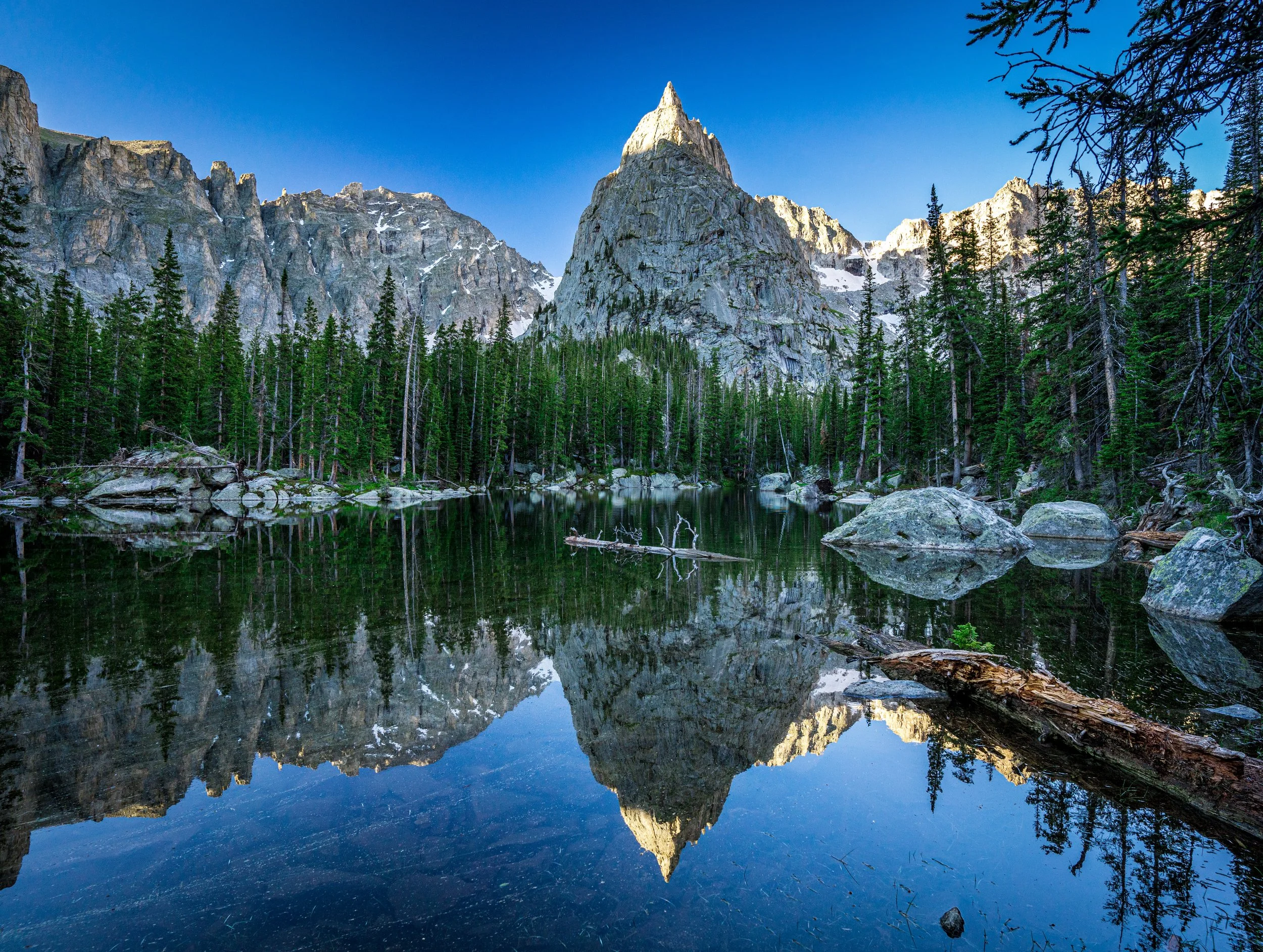
A slender granite spire rising above Mirror and Crater Lakes deep in the Indian Peaks Wilderness.
About Lone Eagle Peak
Lone Eagle Peak is an 11,946-foot spire in the Indian Peaks Wilderness of Grand County, on the west side of the Continental Divide. Seen from the north, it looks like a single sharp fin of rock towering over a pair of alpine lakes, and it ranks among the most photographed mountain profiles in the state.
Getting there is the catch. The classic approach starts at Monarch Lake, east of Lake Granby, and follows the Cascade Creek Trail past waterfalls and up a long forested valley to Mirror Lake and Crater Lake, a round trip of about 14 miles with more than 2,000 feet of gain.
Many people turn it into an overnight trip to be at the lakes for sunrise and sunset, which requires a wilderness permit in summer. Strong day hikers can do it in one long push, ideally starting in the dark to catch Mirror Lake before the morning breeze arrives.
This knife-edge summit north of the Indian Peaks Wilderness is one of the most striking mountains in the state — a near-vertical spire that looks almost unclimbable from most angles. Reaching a good vantage point means a long day or an overnight backpack, but the payoff is a mountain shape you genuinely won't find anywhere else in Colorado. Shoot it from across the lake at the base for a reflection, or pack a telephoto to compress the spire against the surrounding ridgeline.
History
The peak honors aviator Charles Lindbergh, nicknamed the Lone Eagle; it has also appeared on maps as Lindbergh Peak and Mount Lindbergh. It sits within the Indian Peaks of the Front Range, in Arapaho National Forest.
The approach begins in the Arapaho National Recreation Area at Monarch Lake, the gateway to the west side of the Indian Peaks and a junction for the Continental Divide Trail, the Arapaho Pass Trail and the Cascade Creek Trail.
Photographing Lone Eagle Peak
Best light: Mirror Lake is the money spot, and it is calmest early: plan to be there by about 8 a.m. or earlier before wind breaks up the reflection. Sunrise light hits the spire from the east, and overnight campers can also catch evening alpenglow. Wildflowers peak in July; September brings fewer bugs and crisp skies.
Shots to look for
- The classic reflection of Lone Eagle Peak in Mirror Lake from its northern shore, with a 24-70mm to include the spire and the cirque walls.
- Lone Eagle from above Crater Lake, using wildflowers or talus in the foreground and a wide lens.
- A tight telephoto of the spire's knife-edge profile in first light.
- Cascade Creek's waterfalls on the approach, shot with a slow shutter in shade.
Photo tips
- If you want the reflection, an overnight permit or a pre-dawn start is almost essential; it's a long walk for a breezy lake.
- Pack a lightweight tripod and an ND or polarizer; the waterfalls on the way are worth stopping for.
- Bring serious bug protection in early summer; mosquitoes can be fierce around the lakes.
- Early-season trips can mean snow and high, cold creek crossings; July through September is the reliable window.
Know before you go
- Overnight camping in the Indian Peaks Wilderness requires a permit from June 1 to September 15, reserved on Recreation.gov; the Crater Lake zone is camping in designated sites only.
- Monarch Lake Trailhead charges a day-use fee ($5 per vehicle per day at last check); interagency passes are accepted.
- Group size in the wilderness is limited to 12 people and stock combined.
- No camping or campfires within 100 feet of trails or water.
- This is a long day at altitude; start early and be off exposed terrain before afternoon storms.
Frequently asked questions
How long is the hike to Lone Eagle Peak?
The hike to the viewpoint lakes below the peak (Mirror and Crater Lakes) is about 14 miles round trip from Monarch Lake with roughly 2,200 feet of gain.
Do you need a permit to camp near Lone Eagle Peak?
Yes. From June 1 to September 15 you need an Indian Peaks Wilderness overnight permit from Recreation.gov, and the Crater Lake zone uses designated campsites.
When is the best time to visit Lone Eagle Peak?
Late June through September, with July through September the most reliable. Early season can mean lingering snow and high creek crossings, and wildflowers peak in July.
Featured in: Best Alpine Lake Hikes in Colorado
Combine it with
Monarch Lake · Lake Granby · Cascade Creek Trail · Grand Lake
More Colorado spots
Sources & further reading: en.wikipedia.org · foxintheforest.net · fs.usda.gov · recreation.gov. Conditions, fees and rules change; check with the managing agency before you go.