Buffalo Herd Nature Preserve
Denver's century-old bison herd, grazing beside I-70 in Genesee Park with the Front Range behind them.
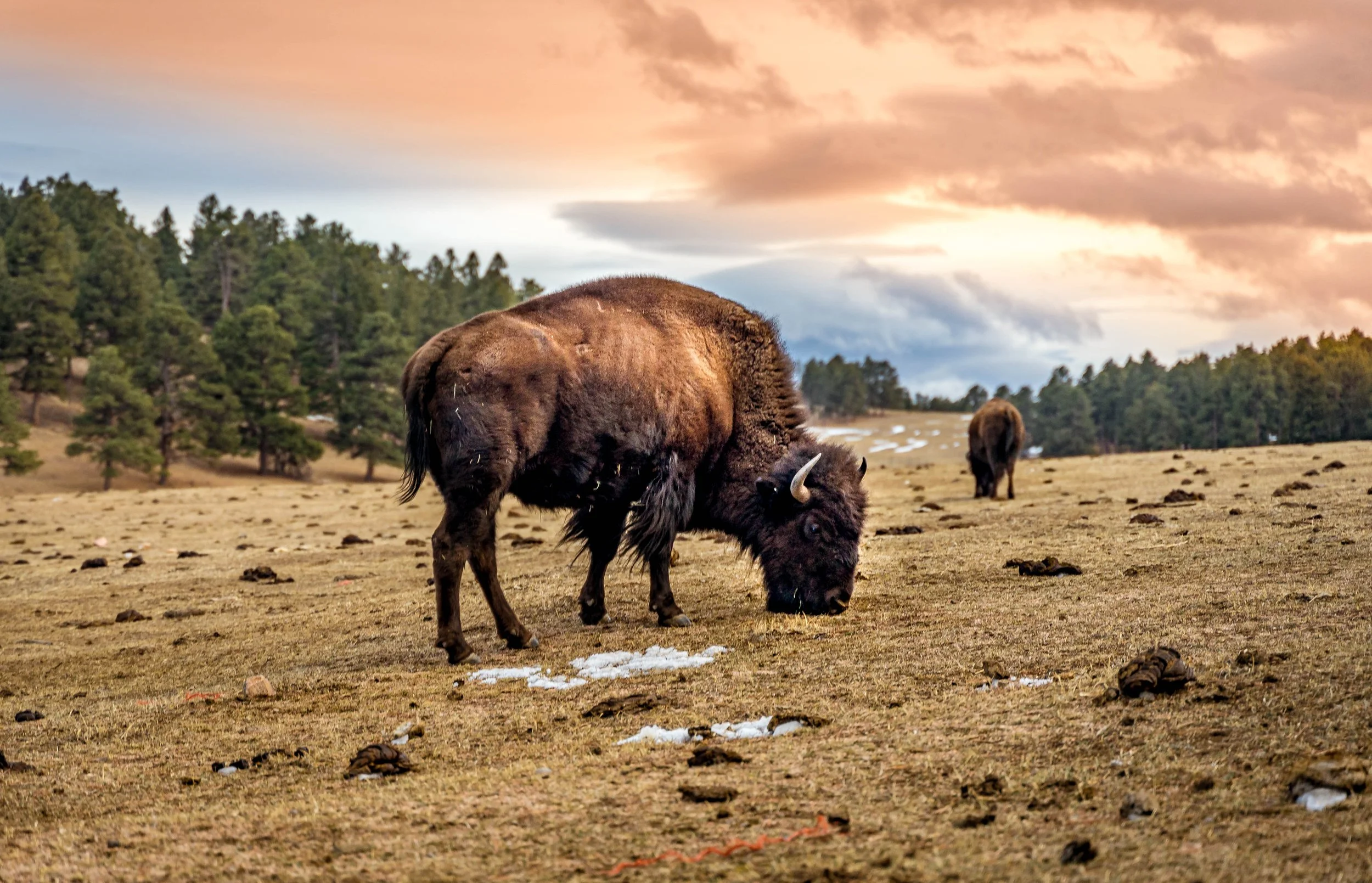
About Buffalo Herd Nature Preserve
Just off I-70 about 20 miles west of Denver, Genesee Park is home to one of the city's two Denver Mountain Parks bison herds. Two to three dozen American bison graze pastures on both sides of the interstate, and scenic overlooks just west of Exit 254 let you watch them without even leaving the car.
Genesee is the largest park in the Denver Mountain Parks system at about 2,400 acres, with short trails that bring you closer to the fenced pastures. The half-mile Genesee Park American Bison Trail and the Chief Hosa Loop both offer views over the meadows.
It's an easy stop on the way to or from the high country and one of the most reliable places near Denver to photograph bison with mountains and evergreen forest in the background.
Denver maintains this bison herd about twenty miles west of the city, descended directly from the last wild herd of bison in the country — seven animals originally brought from Yellowstone in 1914. You can usually spot them from I-70 on the right side heading west into the mountains, though a stop at the overlook gets you a much better shot — bring a telephoto, since you'll be photographing from behind fencing at a respectful distance.
History
After wild bison were wiped out in Colorado, Denver began a herd at the Denver Zoo in City Park. The herd moved to Genesee Park in 1914, with animals from Yellowstone's herd added over time to strengthen it, and a second herd was established at Daniels Park in 1938.
Denver first bought land at Genesee in 1912, and the park is now listed on the National Register of Historic Places. In recent years the city has transferred surplus bison to Native American tribes, including 35 animals in 2023.
Photographing Buffalo Herd Nature Preserve
Best light: Early morning and late afternoon give the warmest light on the bison and the best chance they're active. Spring brings shaggy, shedding coats and reddish calves; winter snow on dark bison fur makes striking high-contrast images.
Shots to look for
- Bison grazing with Front Range ridges behind, from the I-70 overlook with a 100-400mm
- Tight portraits of faces and horns on frosty mornings, using a long telephoto
- Calves beside their mothers in late spring
- Wide environmental frames from the Chief Hosa Loop showing pasture, forest and sky
- Backlit breath or dust kicked up at sunrise for atmosphere
Photo tips
- Bison may be far from the fence or out of sight on any given day; check both the north and south pastures
- Never enter the pastures or climb fences; bison are large, fast and unpredictable
- Use a beanbag on your car window or a monopod at the overlooks
- Shoot through the fence by placing your lens close to the wire with a wide aperture to blur it away
- Midday heat shimmer over the pasture can soften long-lens shots; go early
Know before you go
- The main bison overlooks are on I-70 just west of Exit 254; the Chief Hosa Loop and I-70 bike path are reached from Exit 253
- The pastures are fenced and closed to the public
- Bison move between pastures, so sightings aren't guaranteed
- Daniels Park near Castle Pines hosts Denver's other bison herd
Frequently asked questions
Where can I see the bison off I-70?
Pull into the scenic overlooks on I-70 just west of Exit 254 at Genesee Park. The pastures lie on both sides of the highway.
Is it free to see the Genesee bison herd?
Yes. Genesee Park is a free Denver Mountain Park.
Where did Denver's bison come from?
The herd began at the Denver Zoo and moved to Genesee Park in 1914, later adding animals from Yellowstone National Park.
Featured in: Photography Spots Near Denver · Where to Photograph Wildlife in Colorado
Combine it with
Lookout Mountain · Red Rocks Park · Evergreen Lake · Echo Lake
More Colorado spots
Sources & further reading: en.wikipedia.org · visitdenver.com. Conditions, fees and rules change; check with the managing agency before you go.