← All themes · All hikes and spots
Photography Spots Near Denver
Not every great shot needs a long drive. These spots are within roughly an hour of Denver, good for a quick sunrise before work, a weekend afternoon, or showing visitors the Front Range.
Tip: Weekday mornings are the quiet time at Red Rocks, the Flatirons and the wildlife refuges. For skyline shots, look for clear air after a storm passes through.
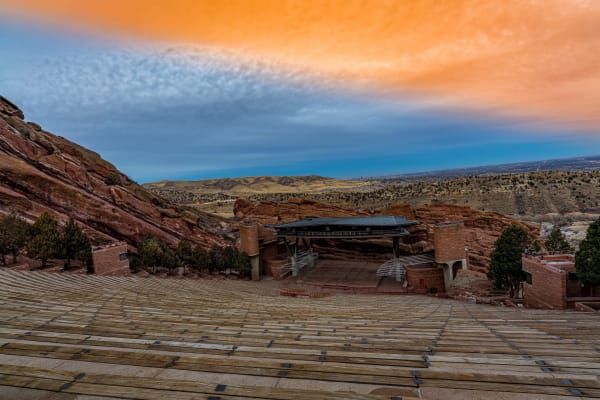
1.Red Rocks
Towering red sandstone monoliths and a world-famous amphitheater, 30 minutes from downtown Denver.
Park size: 868 acres · Location: Morrison, Jefferson County · Trading Post Trail: 1.4 mi loop
Best light: Sunrise is the prime time: the east-facing sides of the monoliths light up first and glow intensely, and the amphitheater looks out toward the rising sun over the plains. Fresh snow on red rock in winter is a special treat, and early mornings avoid both crowds and event setups.
Full guide →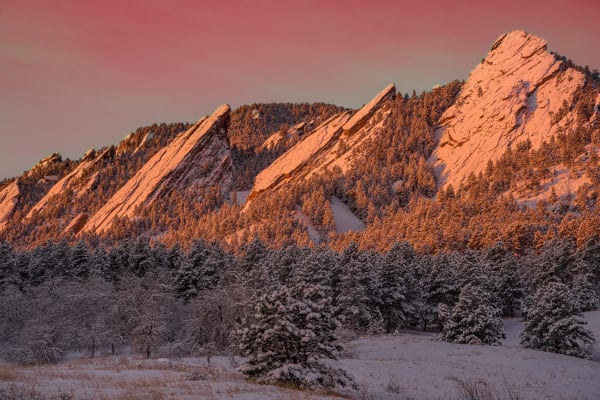
2.Boulder / The Flatirons
Boulder's tilted sandstone slabs, glowing red at sunrise above the historic Chautauqua meadow.
Green Mountain elevation: 8,148 ft · Rock: Fountain Formation sandstone, about 290 million years old · Trailhead: Chautauqua Park, Boulder
Best light: Sunrise. The east-facing slabs catch first light and glow orange for a few minutes, best after a dusting of snow in fall or spring. Late spring brings green meadow grass and wildflowers in the Chautauqua meadow; sunsets mostly put the rocks in shadow.
Full guide →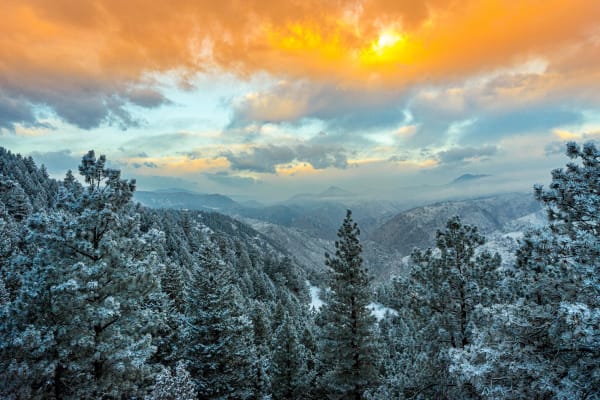
3.Lookout Mountain
Golden's foothill overlook: switchback road, Buffalo Bill's grave and the city lights spread out below.
Summit elevation: About 7,377 ft · County: Jefferson · Access: Lariat Loop Road (built 1913) from Golden
Best light: Sunrise over the plains is excellent since the mountain faces east, and blue hour after sunset is the time for glittering Denver and Golden city lights. Fall brings golden cottonwoods in Clear Creek below and scrub oak color on the slopes.
Full guide →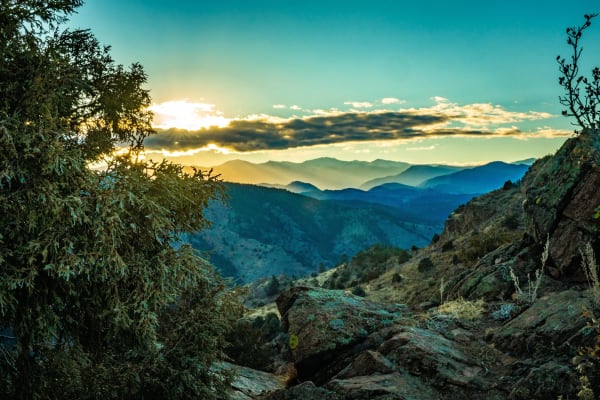
4.Mount Morrison
A steep, short grind above Red Rocks with a view over the amphitheater and all of Denver.
Summit elevation: 7,881 ft · Distance: About 3.8 mi round trip · Elevation gain: About 2,000 ft
Best light: Sunrise is the reason to go: you look east over Red Rocks and the plains as the sun comes up behind Denver, lighting the red sandstone below you. City lights before dawn add interest. Winter inversions and clear post-storm mornings give the cleanest views of the skyline.
Full guide →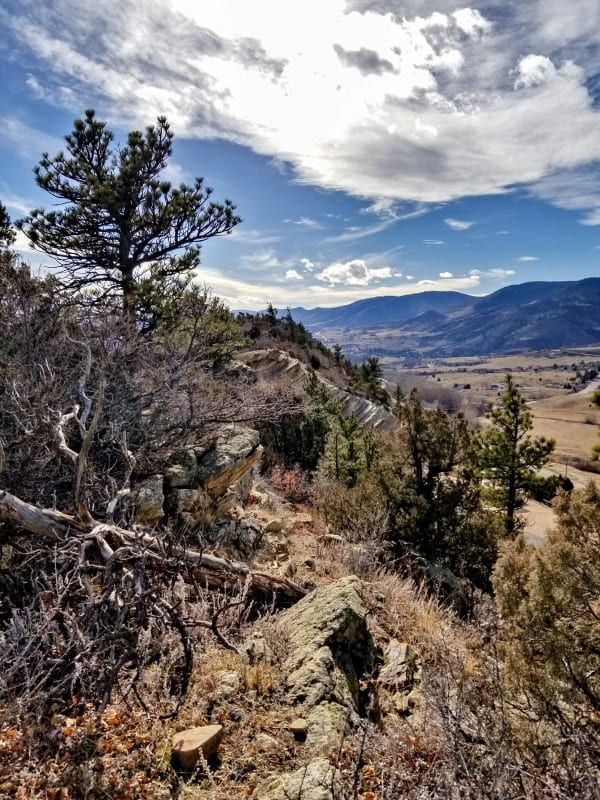
5.Dakota Ridge Trail
A rocky hogback ridge walk above Morrison, with Red Rocks on one side and the Denver skyline on the other.
Distance: About 4.25 mi (ridge is ~2 mi one way) · Elevation gain: About 750 ft · Difficulty: Moderate, with short rocky scrambles
Best light: Sunrise is the classic time here. The first light hits the east-facing sandstone of the hogback and the red fins of Red Rocks to the west, while the city glows behind you. Sunset gives you silhouettes of the foothills and sometimes city lights coming on to the east. Green grass in spring and snow-dusted red rock in winter are both strong.
Full guide →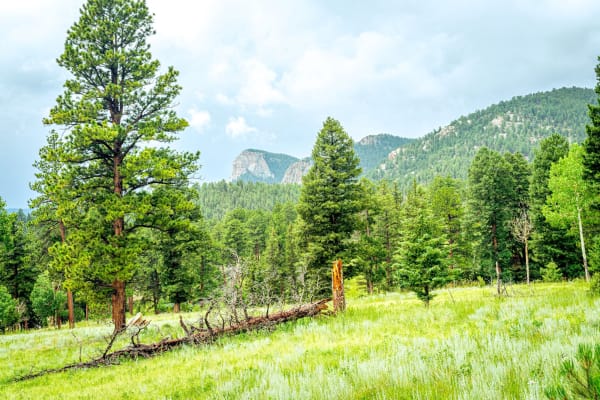
6.Staunton State Park
Granite domes, a hidden waterfall and old homestead cabins, less than an hour up US 285 from Denver.
Elk Falls hike: About 12 mi round trip · Elevation: About 8,100 ft to over 10,000 ft · Trails: About 37 miles
Best light: The big granite formations face a mix of directions, so plan around the specific rock: early and late light warms the cliffs and pulls texture out of the domes. Late September brings gold aspen pockets, and Elk Falls is fullest in late spring and early summer snowmelt; shoot the falls in shade or overcast for even light on the water.
Full guide →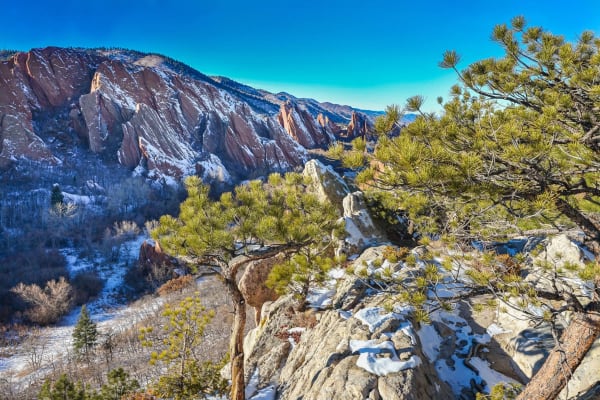
7.Roxborough State Park
Tilted red sandstone fins, foothill trails and a National Natural Landmark just southwest of Denver.
Size: About 3,300-3,400 acres · Elevation: About 5,900-7,280 ft · Trails: About 15 miles; Fountain Valley Trail is 2.3 mi round trip
Best light: The sandstone fins glow deep red-orange when low sun hits them, so aim for the first and last hours the park is open. Park hours (listed as 7 a.m. to 7 p.m.) can cut off true sunrise and sunset in summer, so spring, fall and winter often line up better with golden hour. Fresh snow on red rock in winter is spectacular.
Full guide →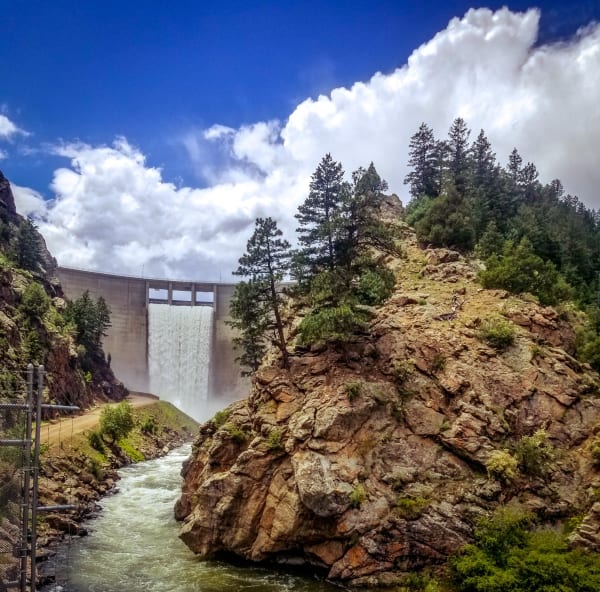
8.Waterton Canyon
A wide, gentle canyon road along the South Platte, famous for its resident bighorn sheep.
Distance: 6.2 mi one way to Strontia Springs Dam (12.4 mi round trip) · Difficulty: Easy, gradual dirt road · Hours: 30 minutes before sunrise to 30 minutes after sunset
Best light: The canyon runs deep and narrow, so direct sun reaches the floor late in the morning and leaves early; soft open shade in the first and last hours is ideal for wildlife. Bighorns can be seen year-round, and fall brings cottonwood color along the river.
Full guide →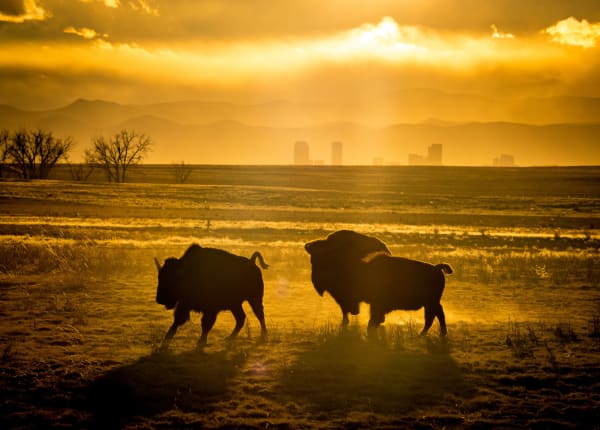
9.Rocky Mountain Arsenal NWR, Commerce City
Bison, bald eagles and the Denver skyline in one frame, on a former chemical weapons site turned wildlife refuge.
Size: About 15,000 acres · Wildlife Drive: 11 miles · Trails: About 20 miles
Best light: Open from sunrise, so early morning gives you low side light on the bison with the skyline and mountains to the southwest and west. Winter is prime for bald eagles, and spring brings bison calves.
Full guide →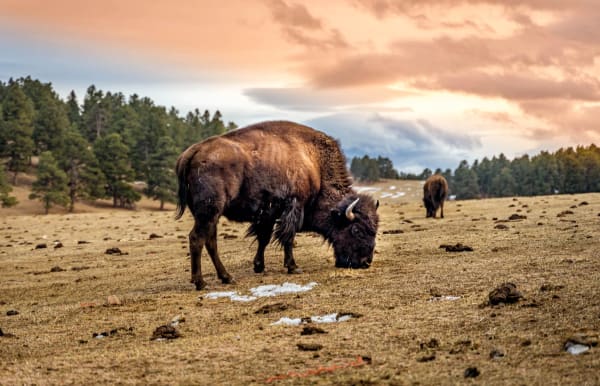
10.Buffalo Herd Nature Preserve
Denver's century-old bison herd, grazing beside I-70 in Genesee Park with the Front Range behind them.
Location: Genesee Park, I-70 Exits 253-254 · Drive from Denver: About 20 miles west · Herd size: Roughly two to three dozen bison
Best light: Early morning and late afternoon give the warmest light on the bison and the best chance they're active. Spring brings shaggy, shedding coats and reddish calves; winter snow on dark bison fur makes striking high-contrast images.
Full guide →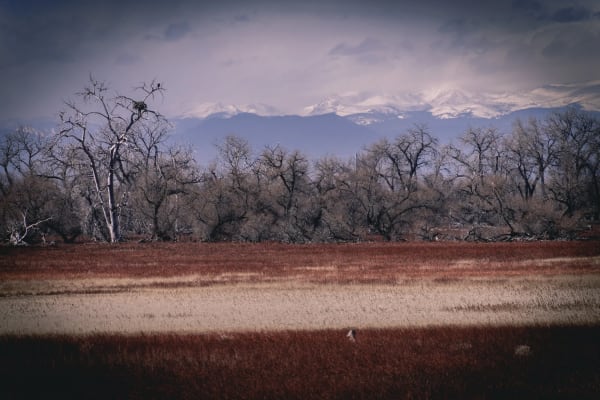
11.Barr Lake
A prairie reservoir northeast of Denver with nesting bald eagles, a busy bird rookery and huge sunsets.
Park size: 2,715 acres; reservoir over 1,900 acres · Lake loop: About 8.8 mi around the lake · Fees/permits: State parks pass or daily vehicle pass
Best light: Sunset is the signature: the sun drops toward the Front Range across the water, lighting up clouds over the plains. Winter (roughly November through March) is prime for bald eagles, while spring and early summer bring nesting activity at the rookery.
Full guide →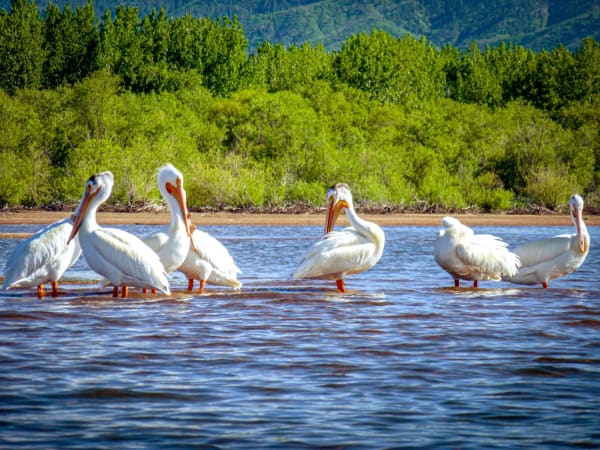
12.Chatfield Reservoir
A big-sky reservoir on Denver's southwest edge with foothill views, wetlands and room to roam.
Park size: About 5,400 acres · Elevation: About 5,450 ft · Trails: 30+ miles
Best light: Sunrise is excellent from the west side of the reservoir looking east across the water, while sunset paints the foothills and clouds to the west. Fall cottonwoods along the South Platte and Plum Creek glow gold in October, and winter brings waterfowl and eagles.
Full guide →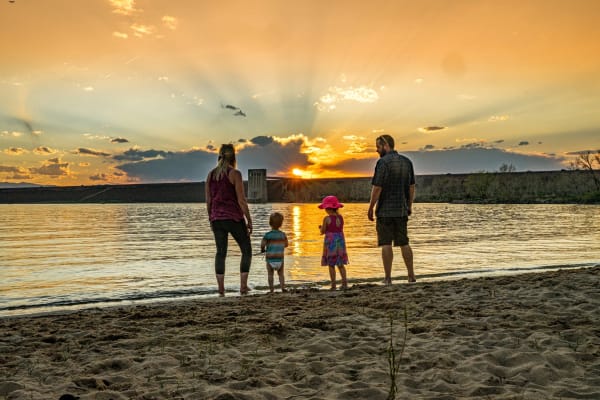
13.Cherry Creek Reservoir
An 880-acre prairie reservoir in Aurora with wide skies, wetlands and Front Range sunsets.
Park size: About 4,200 acres · Reservoir: About 880 surface acres · Elevation: About 5,500 ft
Best light: Sunset is the classic shot here: from the east side of the reservoir you look west across the water to the mountains as the sky lights up. Sunrise from the west side can catch warm light on the water with the plains beyond. Fall brings golden cottonwoods along the creek corridor.
Full guide →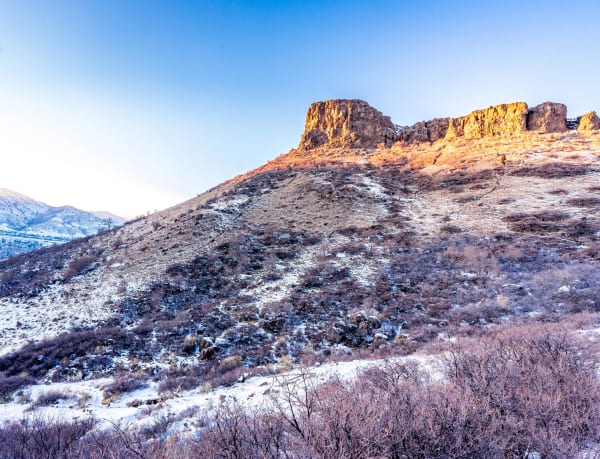
14.South Table Mountain Park
A lava-capped mesa above Golden with Front Range sunsets, city lights and a surprising backstory.
Summit elevation: Castle Rock, 6,338 ft (private) · Trailheads: Camp George West (Kilmer St), Golden Hills Rd, Rimrock Dr · Difficulty: Easy to moderate
Best light: Sunset is the classic shot here: the west rim faces straight into the foothills and the light rakes across Castle Rock and the mesa-top grasses. Spring green-up and the golden grasses of late summer and fall both work, and a dusting of snow on the basalt cliffs is a winter bonus.
Full guide →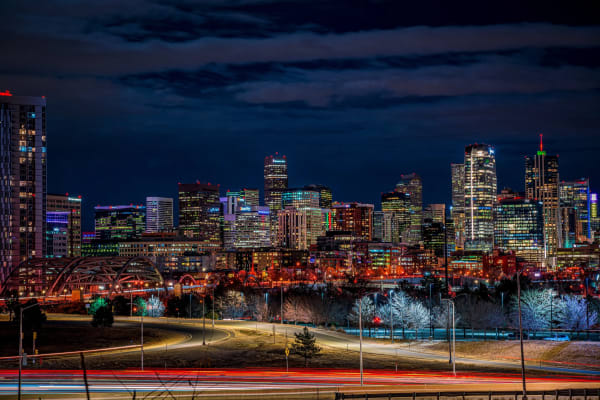
15.Denver
The Mile High City — a skyline with the Front Range as its backdrop and mountain parks at its doorstep.
Elevation: 5,280 ft (marked on the State Capitol steps) · Founded: 1858; incorporated November 7, 1861 · Population: 715,522 (2020 census)
Best light: Sunset and blue hour are the go-to windows for skyline shots with the mountains behind, especially from viewpoints east of downtown looking west. Clear winter days after a storm give the sharpest, snowiest peaks; summer brings dramatic afternoon storm clouds over the foothills.
Full guide →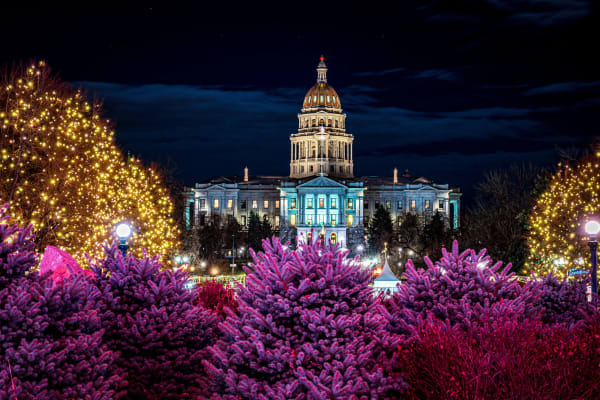
16.Colorado State Capitol, Denver
A gold-leaf dome, a Mile High step and a 99-step climb to one of Denver's best skyline views.
Opened: 1894 · Architect: Elijah E. Myers · Hours: Mon-Fri 7:30 am-5 pm; closed weekends
Best light: The main facade faces west over Civic Center Park, so late afternoon and sunset light the columns and dome warmly. Blue hour, when the dome is lit and the sky still holds color, is the best time for the full building.
Full guide →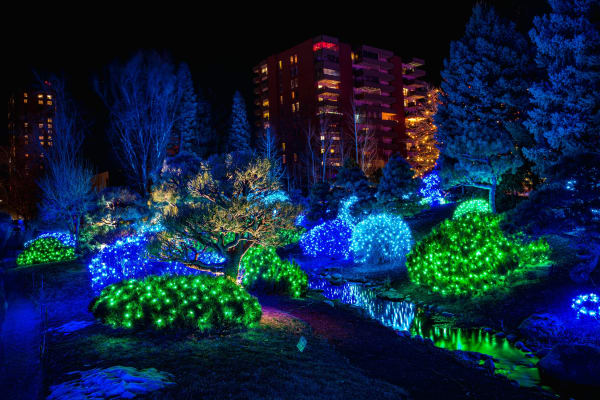
17.Denver Botanic Gardens
Twenty-four acres of themed gardens beside Cheesman Park, with a landmark conservatory and a Japanese garden.
Size: About 24 acres (York Street) · Founded: 1951 · Address: 1007 York St, Denver
Best light: Come at opening on a weekday for soft light and fewer people; the water gardens and Shofu-en are calmest early. Late spring brings tulips and irises, midsummer the water lilies, and autumn the ornamental grasses and Japanese maples. Overcast days are ideal for flower close-ups.
Full guide →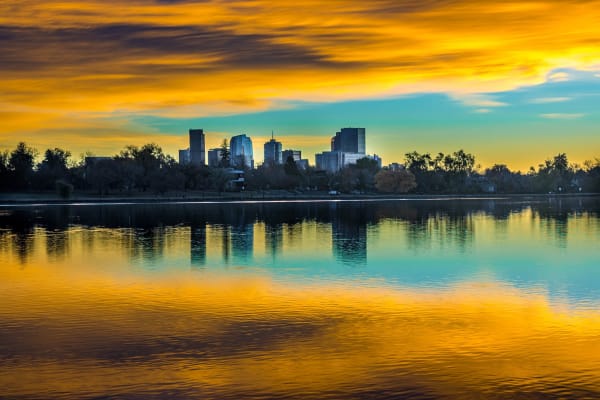
18.Sloan's Lake
Denver's biggest lake, with a 2.5-mile shoreline path and the downtown skyline rising across the water.
Lake size: About 177 acres · Park size: About 290 acres (Denver's 2nd largest) · Distance: About 2.5 mi paved loop
Best light: Sunset is the signature time. From the west shore, you shoot east across the lake as the downtown towers catch the last warm light, then stay through blue hour as the city lights reflect on calm water. At sunrise, the sun comes up behind downtown for silhouettes, while the foothills to the west glow pink.
Full guide →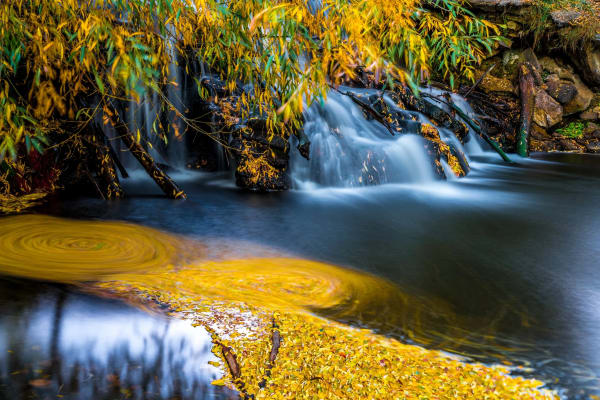
19.Golden Ponds
Four reclaimed gravel ponds in Longmont with big views of Longs Peak.
Size: 88 acres, including about 56 acres of water · Trails: About 2.6 miles, paved and gravel · Hours: 1 hour before sunrise to 1 hour after sunset
Best light: Sunrise is the best bet: the peaks to the west catch first light while the ponds are often calm, giving you alpenglow reflections of Longs Peak. Spring and fall migration bring the most bird variety, and late April and May are good for swallows over the water.
Full guide →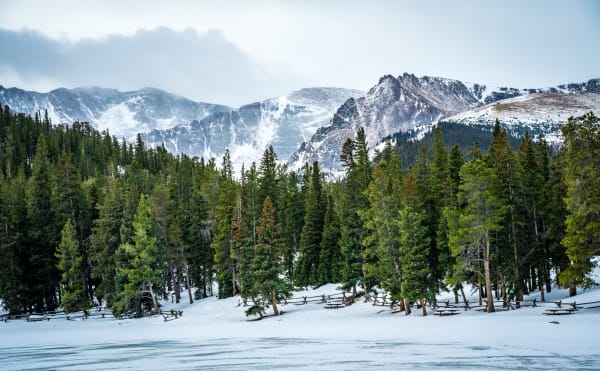
20.Echo Lake
A glacial lake at 10,600 feet at the foot of the Mount Blue Sky road, with a 1926 log lodge on its shore.
Lake elevation: About 10,600 ft · Managed by: Denver Mountain Parks · Getting there: About 12 mi south of Idaho Springs on CO 103
Best light: Sunrise and the hour after are best for calm water and reflections of the surrounding ridges. In early fall, the willows and scattered aspens around the lake and along CO 103 turn gold, and the lake often freezes by late fall.
Full guide →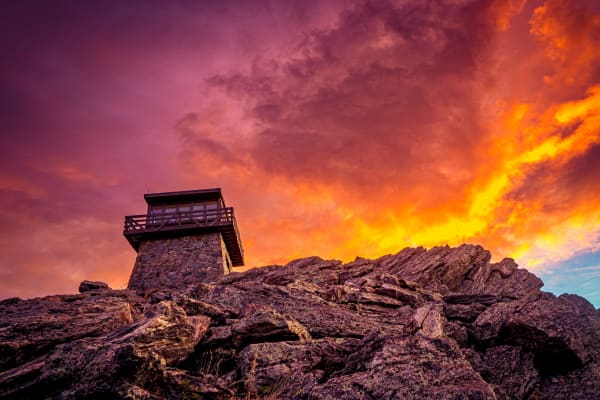
21.Mestaa'Ėhehe Mountain Fire Lookout
Sleep in a CCC-built stone lookout above 11,000 feet, with Denver's lights on one side and Mount Blue Sky on the other.
Summit elevation: 11,486 ft · Walk in: About 1 mi from the summer gate; about 2 mi in winter · Capacity: 4 guests
Best light: Stay the night and shoot both ends of the day: sunset paints the Mount Blue Sky massif and the Divide to the west, while sunrise comes up over the plains to the east. Clear winter nights give the crispest views of the Denver city glow.
Full guide →
More Colorado guides
Best Fall Color Spots in Colorado · Best Sunrise Photography Spots in Colorado · Easy Colorado Hikes With Big Views · Winter Photography Spots in Colorado · Best Alpine Lake Hikes in Colorado · Colorado 14ers: Hiking and Photography Guide · Best Wildflower Hikes in Colorado · Colorado Waterfall Hikes · Where to Photograph Wildlife in Colorado · Night Sky and Storm Photography in Colorado