Lake Dillon
Summit County's big blue reservoir, ringed by the Tenmile and Gore ranges and three mountain towns.
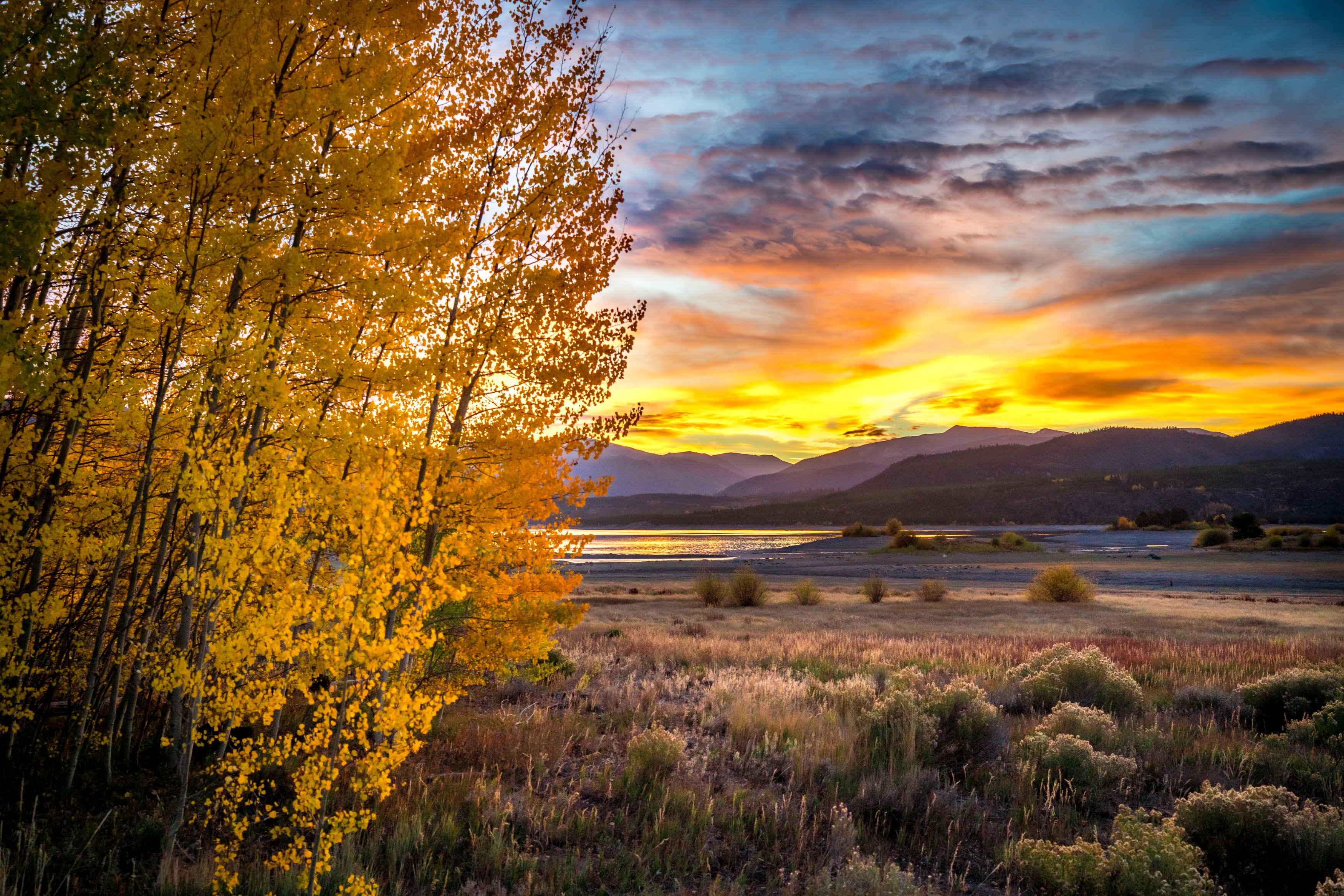
About Lake Dillon
Lake Dillon, officially Dillon Reservoir, is the large mountain reservoir in the heart of Summit County, bordered by the towns of Frisco, Dillon and Silverthorne just off I-70. Owned by Denver Water, it sits around 9,017 feet with roughly 27 miles of shoreline, and it is a major piece of Denver's water supply.
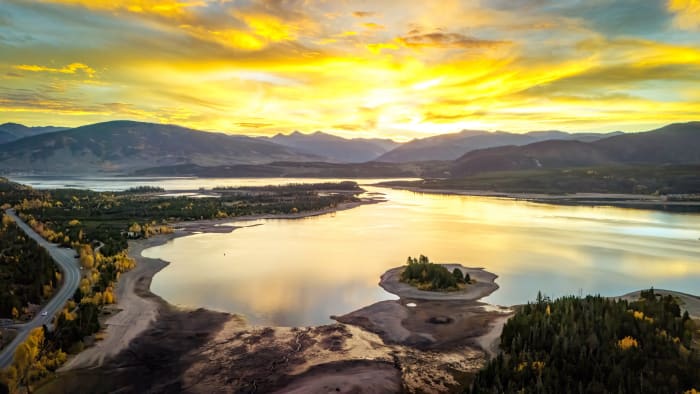
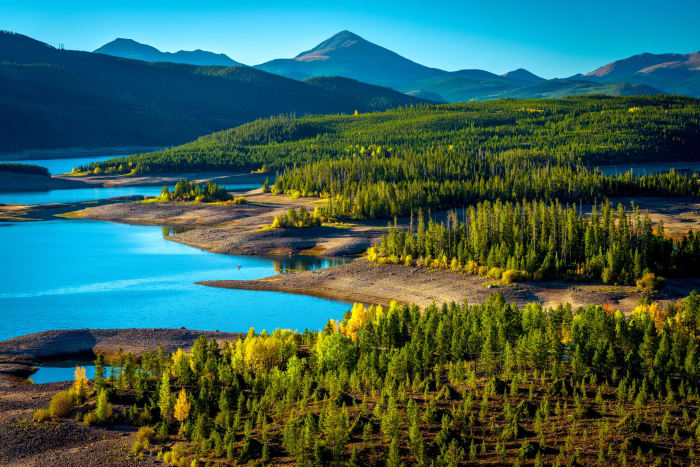
A paved recreation path circles much of the shore, two marinas launch sailboats and paddlers, and peninsulas and coves give endless foreground options against the surrounding peaks. Sapphire Point, above the south shore, is the classic overlook.
Swimming is not allowed, but the lake is open year-round, and in winter it becomes a frozen, snow-covered plain for ice fishing and wandering.
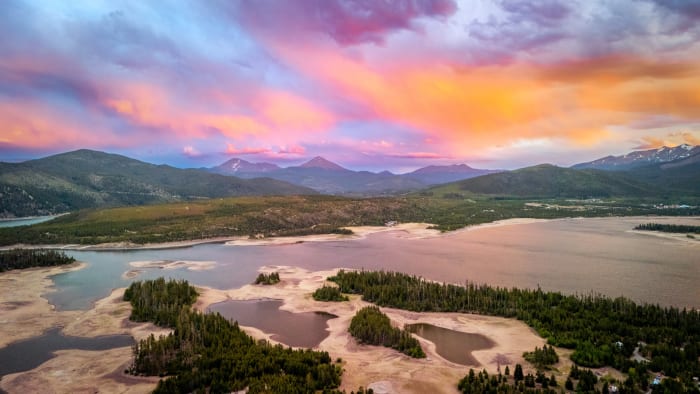
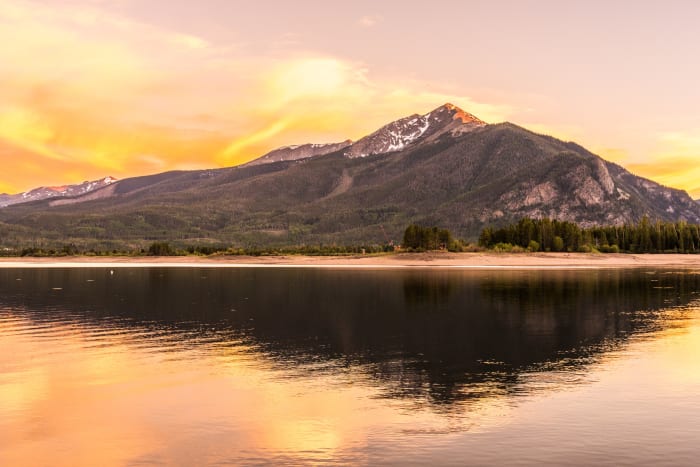
This 3,233-acre reservoir sits south of I-70, ringed by Frisco, Silverthorne, and Dillon, with the Gore and Tenmile Ranges standing behind it in almost every direction you look. The shoreline trail network makes it easy to find a clean composition without a boat — sailboats add a nice moving element on breezy afternoons, and the water goes glass-still at dawn before the wind picks up, which is your best window for a genuine mountain reflection.
History
Denver Water built the dam between 1961 and 1963, flooding the original town of Dillon, which had already moved twice. In its final move the town relocated to a site set aside by the Denver Water Board; some buildings, including the church, were moved, others went to Frisco, Breckenridge and Silverthorne, and 327 graves were relocated.
Water from the reservoir travels east through the 23.3-mile Harold D. Roberts Tunnel, completed in 1962, beneath the Continental Divide to the South Platte basin and the Denver area.
Photographing Lake Dillon
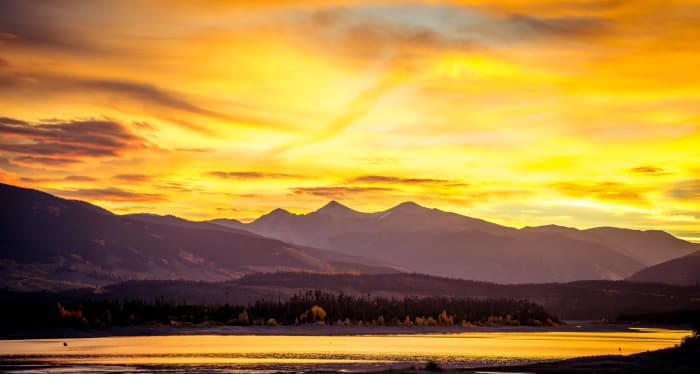
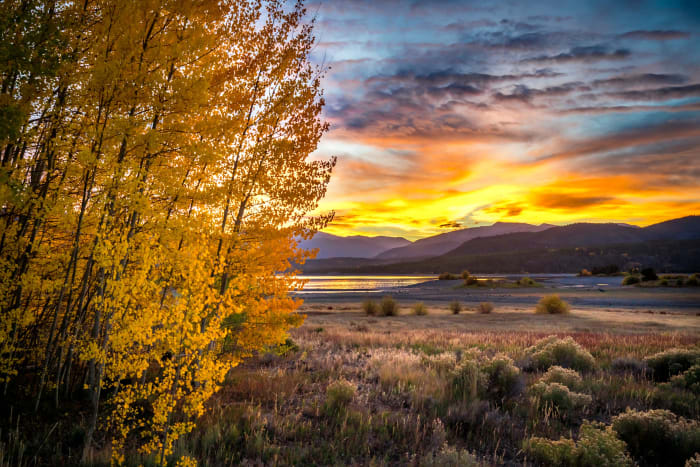
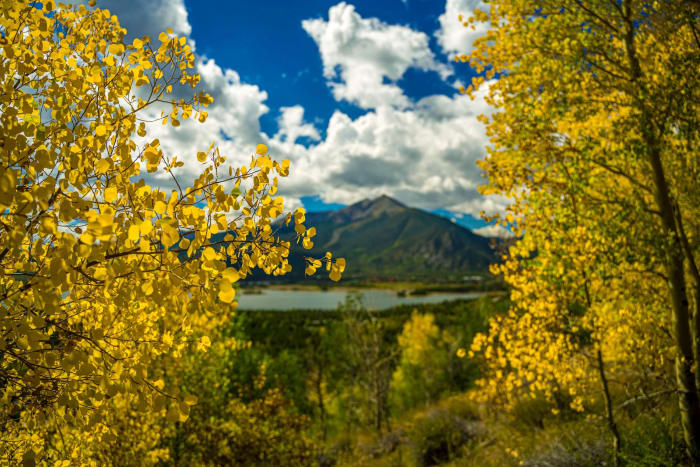
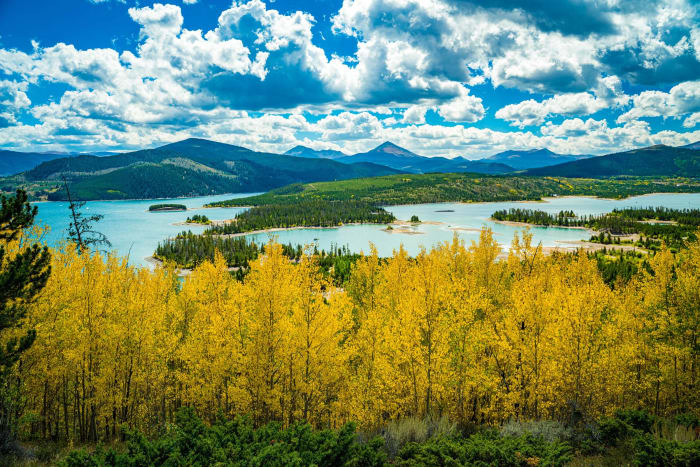
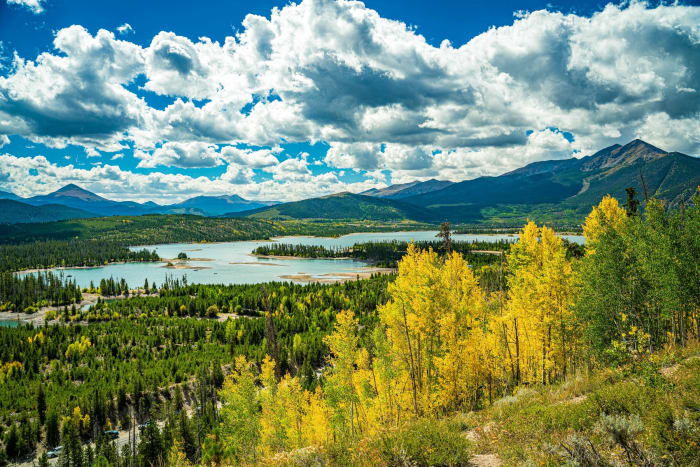
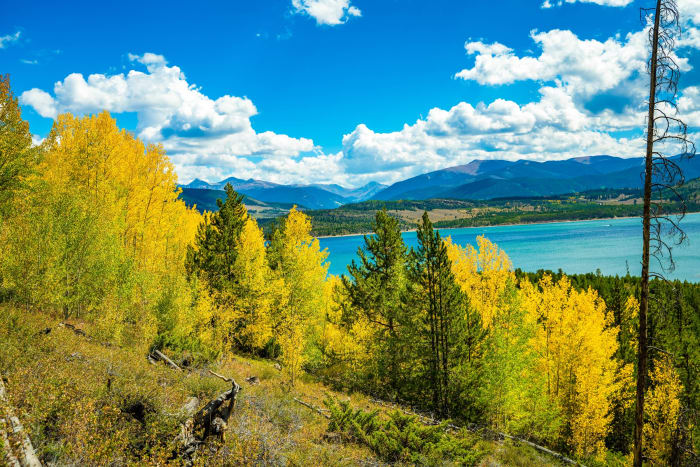
Best light: Sunrise from the Dillon side lights the Tenmile Range and the peaks above Frisco across the water; sunset from the Frisco Peninsula or Sapphire Point backlights the Gore Range. Calm water is most likely at dawn, and late September brings aspen on the surrounding hills plus the first snow on the peaks.
Shots to look for
- Sapphire Point overlook at sunset, wide angle across the reservoir to the Gore Range and surrounding peaks
- Sailboats at the Dillon Marina at golden hour with a telephoto
- Glassy dawn reflections of the Tenmile Range from a cove along the recreation path
- Frozen winter shoreline with pressure ridges and snow patterns as leading lines
- Dillon Amphitheater area and lakeshore trees framing the water from the Dillon side
Photo tips
- Drones may not take off or land on Denver Water property; plan accordingly.
- Wind picks up most afternoons; come at dawn for reflections.
- A polarizer deepens the blue water and cuts glare on sunny days.
- Ice is used at your own risk; stay off it unless conditions are known to be safe.
Know before you go
- Swimming, scuba and other water-contact sports are prohibited because of cold water and water-quality concerns.
- Pets must be leashed.
- Trailered boats launch only at the Dillon and Frisco Bay marinas.
- The reservoir is open 24 hours, year-round.
Prints from Lake Dillon
Every photo is available as a print on metal, canvas, wood or fine art paper.










Frequently asked questions
Can you swim in Lake Dillon?
No. Denver Water prohibits swimming and other water-contact sports because of cold temperatures and water-quality concerns.
Can you fly a drone at Lake Dillon?
Drones are not allowed to launch or land on Denver Water property, which includes the reservoir shoreline.
Where is the best view of Lake Dillon?
Sapphire Point Overlook above the south shore is the classic spot, especially at sunset.
Featured in: Winter Photography Spots in Colorado
Combine it with
Silverthorne · Frisco · Sapphire Point Overlook · Keystone
More Colorado spots
Mayflower Gulch · Marble, CO (Crystal River valley) · Dream Lake
Sources & further reading: en.wikipedia.org · denverwater.org. Conditions, fees and rules change; check with the managing agency before you go.