Lower, Middle and Upper Blue Lakes
Three turquoise tarns stacked beneath Mount Sneffels in the Sneffels Range near Ridgway.
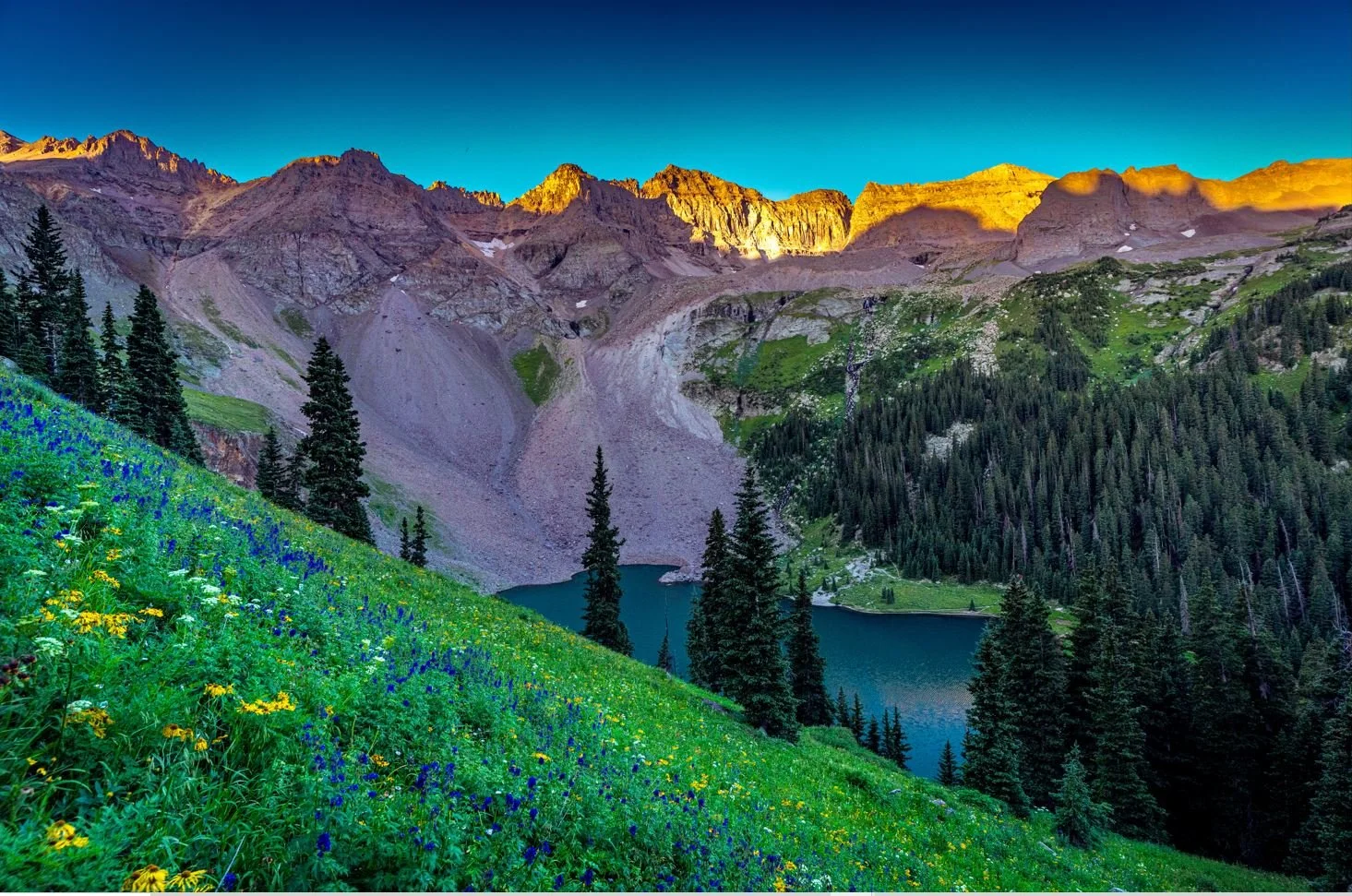
About Lower
The Blue Lakes sit in a glacial basin in the Mount Sneffels Wilderness, on the Uncompahgre National Forest southwest of Ridgway. The trail starts at the end of East Dallas Creek Road and climbs through forest to Lower Blue Lake, the largest of the three, about 3.3 to 3.5 miles in. From there it steepens to the smaller Middle Lake and on to Upper Blue Lake, around 11,720 feet.
The full round trip to the upper lake is roughly 8 to 8.6 miles with about 2,400 feet of gain. The color of the water, a milky turquoise, is what makes the place famous, and the backdrop is some of the most jagged terrain in Colorado: Mount Sneffels, Dallas Peak, Gilpin Peak and S3 ring the basin.
Its popularity has grown to the point that the Forest Service now has special rules here, and a permit system is planned.
An 8.7-mile out-and-back near Ridgway that climbs into three glacial lakes stacked up the same drainage, each one a different shade of blue depending on glacial silt and light. It's a legitimately challenging day, and a popular one for backpackers who camp partway up rather than trying to do all three lakes and back in one push — worth the extra weight for sunrise light on the upper lake with nobody else around yet.
History
Mount Sneffels takes its name from Jules Verne's Journey to the Center of the Earth, and it was first climbed in 1874 by members of the Hayden Survey. The lakes fill cirques carved by glaciers in the Sneffels Range, part of the San Juan Mountains.
The basin lies inside the roughly 16,500-acre Mount Sneffels Wilderness. Above the upper lake, a steep trail continues to Blue Lakes Pass near 13,000 feet and drops into Yankee Boy Basin on the Ouray side.
Photographing Lower
Best light: Mount Sneffels rises east of the lakes, so it is backlit at sunrise and lit on its west face in the afternoon and evening, when storms are also most likely. Early morning still gives the calmest water and soft light on Dallas and Gilpin peaks to the south. Late July and August bring wildflowers; higher sun intensifies the turquoise, so a polarizer earns its keep.
Shots to look for
- Mount Sneffels over Lower Blue Lake from its western shore, with shoreline rocks as a foreground.
- The view from about a quarter mile above Upper Blue Lake, looking back down on all three lakes stacked in the basin.
- Dallas Peak and Gilpin Peak rising above Upper Blue Lake with a 24-70mm.
- Tight telephoto details of the turquoise water against white talus and snowfields.
Photo tips
- A circular polarizer makes the lakes' color pop and cuts surface glare.
- Arrive very early; parking at the trailhead is small and the trail is busy on summer weekends.
- The trail beyond the upper lake toward Blue Lakes Pass is steep with drop-offs; don't push on in poor conditions.
- Storms build fast over the Sneffels Range; plan to leave the upper basin by early afternoon.
Know before you go
- Under a Forest Service order (2026-2029), camping is prohibited at Middle and Upper Blue Lakes, overnight groups in the East Dallas Creek area are limited to 6, and campfires are banned there.
- A limited-entry permit system is in development; the Forest Service says no permits will be required before 2027. Check the GMUG website for updates.
- Human waste must be packed out in the East Dallas Creek area, and food must be stored in bear-resistant containers.
- East Dallas Creek Road is dirt and can be rough; check current conditions before taking a low-clearance car.
- Dogs must be leashed or under direct control.
Prints from Lower
Every photo is available as a print on metal, canvas, wood or fine art paper.









Frequently asked questions
How long is the Blue Lakes hike?
About 3.3 to 3.5 miles one way to Lower Blue Lake, and roughly 8 to 8.6 miles round trip to Upper Blue Lake, with about 2,400 feet of gain.
Do you need a permit for Blue Lakes?
Not as of the 2026 season, but the Forest Service is developing a limited-entry permit system expected no earlier than 2027. Camping is already banned at Middle and Upper Blue Lakes.
Can you camp at Blue Lakes?
Only away from the Middle and Upper lakes and at least 100 feet from trails and water, with a 6-person overnight group limit and no campfires in the East Dallas Creek area.
Featured in: Best Alpine Lake Hikes in Colorado
Combine it with
Yankee Boy Basin · Ridgway · Ouray · Dallas Divide
More Colorado spots
Sources & further reading: fs.usda.gov · ridgwaycolorado.com · rockymountainhikingtrails.com · summitpost.org. Conditions, fees and rules change; check with the managing agency before you go.