Boulder / The Flatirons
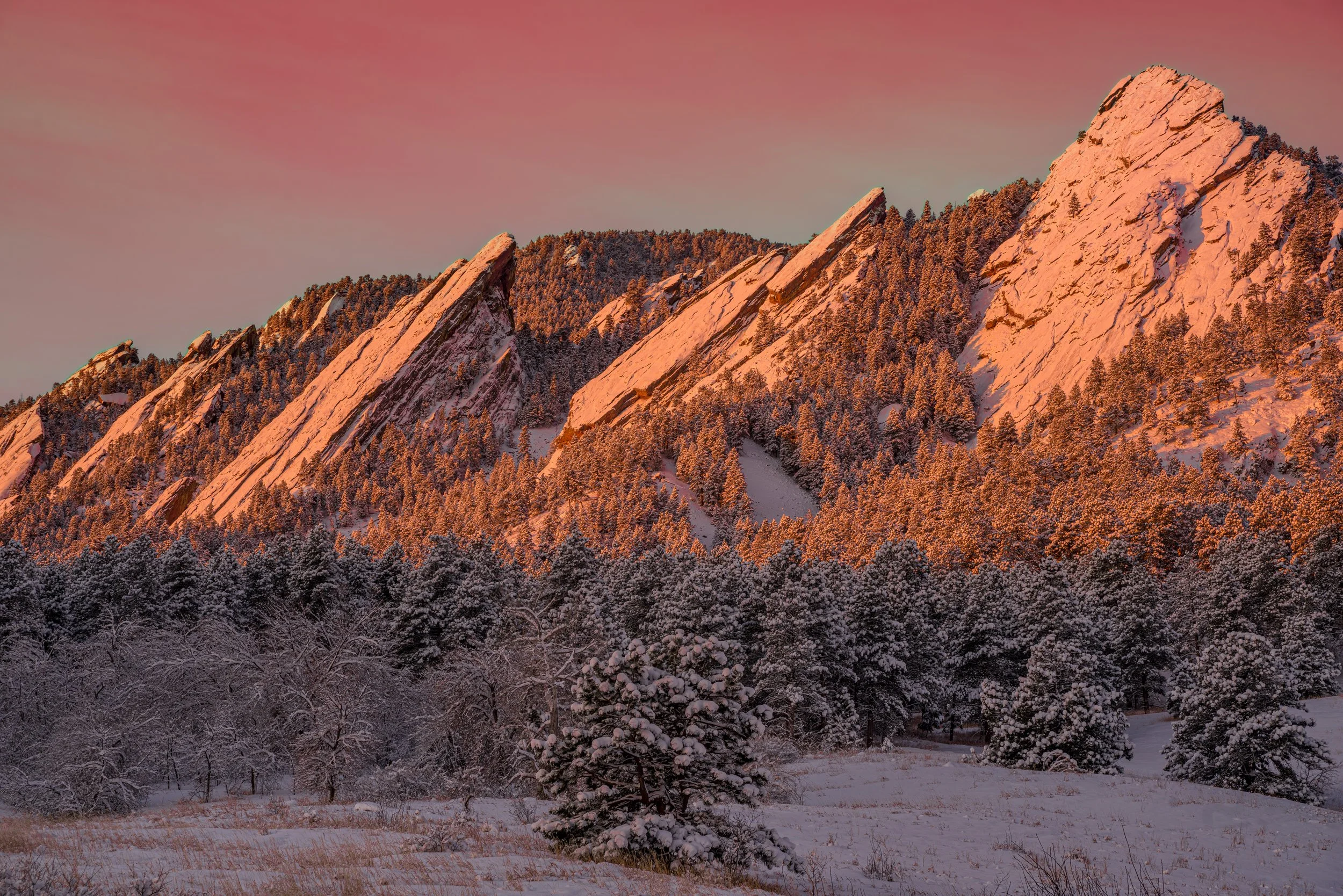
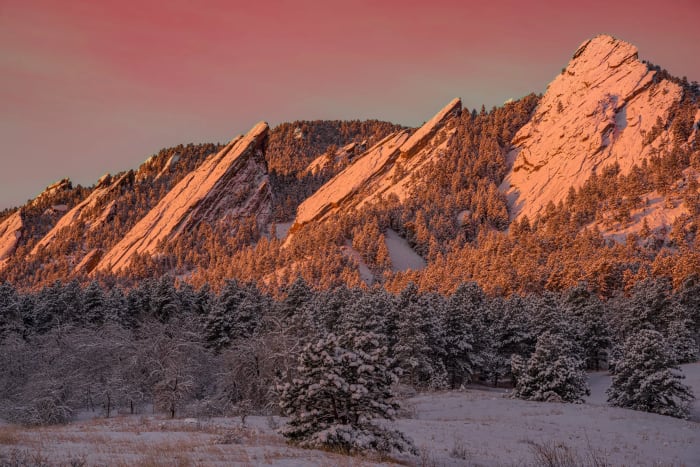
Boulder's tilted sandstone slabs, glowing red at sunrise above the historic Chautauqua meadow.
About Boulder / The Flatirons
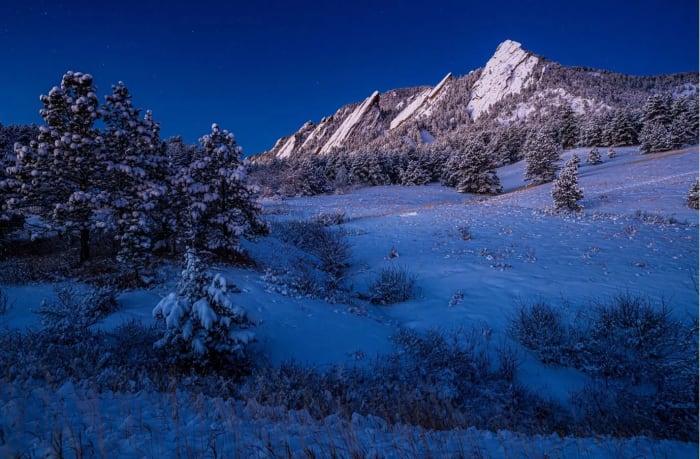
The Flatirons are the giant tilted slabs of reddish sandstone on the east face of Green Mountain, above Boulder. Five large, numbered Flatirons line up from north to south, with many smaller ones on Bear Peak and the surrounding foothills. They are protected within City of Boulder Open Space and Mountain Parks.
Most visitors start at Chautauqua Park, where a sloping meadow at the base gives a full-frame view of the First, Second and Third Flatirons and a web of trails heads up into the rocks.
Because they face east, the Flatirons are one of the great sunrise subjects on the Front Range, turning orange and red in the first light while the city below is still in shadow.
Five slanted sandstone slabs standing on end above the city, visible from nearly anywhere in Boulder and unmistakable from the air. Flatirons Vista Trail gives you some of the best views without the scrambling required to actually stand on them, and sunset is when the rock genuinely glows — a low side light rakes across the striations and makes the whole formation look lit from within.
History
The slabs are conglomeratic sandstone of the Fountain Formation, deposited roughly 290 to 296 million years ago and tilted upward during the Laramide Orogeny; erosion later exposed them. Settlers thought they looked like old-fashioned clothes irons; earlier names included 'Chautauqua Slabs' and 'The Crags.'
In 1898 Boulder voters approved bonds to build the Colorado Chautauqua, a summer school and lecture camp for Texas teachers, which opened July 4, 1898, with its Auditorium and Dining Hall. Early visitors hiked to the Flatirons. The Chautauqua was named a National Historic Landmark in 2006.
Photographing Boulder / The Flatirons
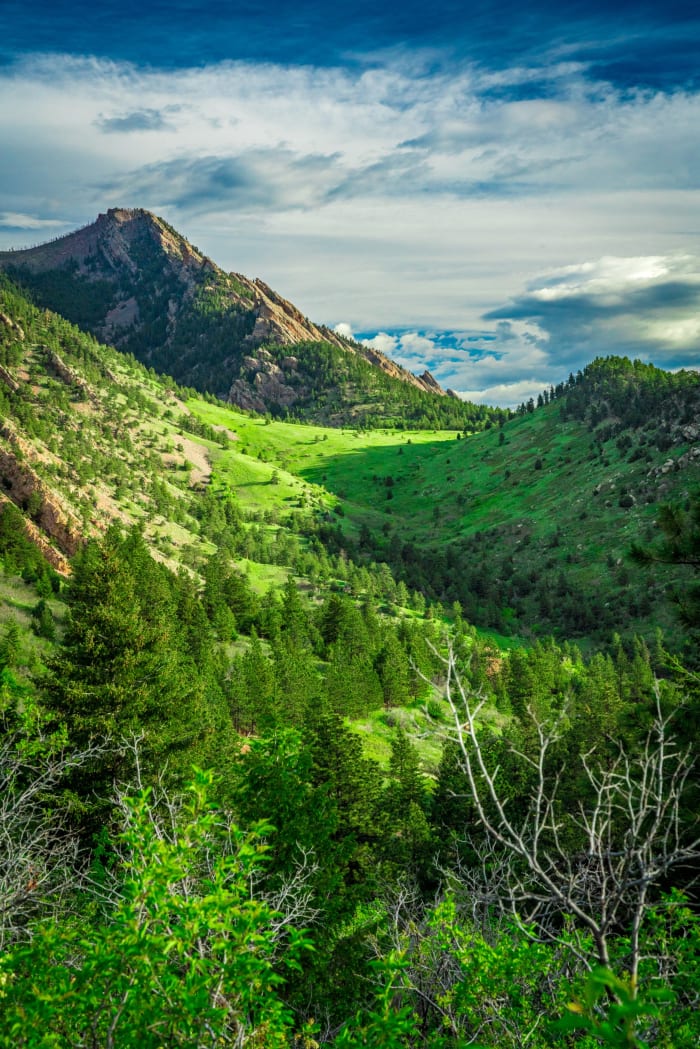
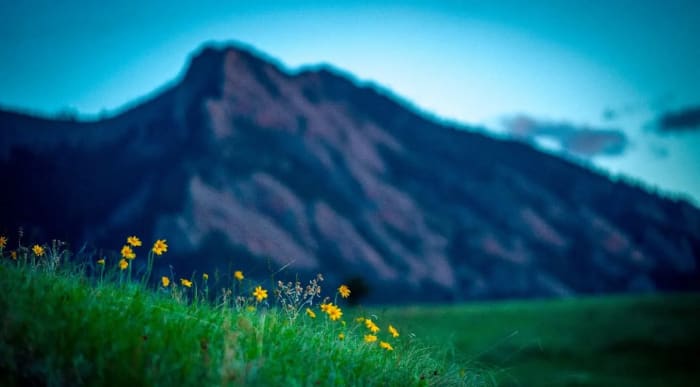
Best light: Sunrise. The east-facing slabs catch first light and glow orange for a few minutes, best after a dusting of snow in fall or spring. Late spring brings green meadow grass and wildflowers in the Chautauqua meadow; sunsets mostly put the rocks in shadow.
Shots to look for
- The classic Chautauqua meadow view of the First through Third Flatirons at sunrise, wide to normal lens from the meadow trail
- A telephoto of the Third Flatiron's face catching alpenglow after fresh snow
- The historic Chautauqua Auditorium or cottages with the Flatirons behind
- From the Royal Arch or Mesa Trail, looking along the slabs with Boulder and the plains below
- Climbers on the First or Third Flatiron for scale, shot with a long lens from the trail
Photo tips
- Arrive well before sunrise; the alpenglow on the rock lasts only minutes.
- Chautauqua parking is very limited and paid parking or shuttles are often in effect on busy days; check current City of Boulder rules.
- Fresh snow on the meadow with clear sky at dawn is the jackpot; watch the forecast after storms.
- Drones are generally not permitted on Boulder Open Space and Mountain Parks land; check before flying.
- Some Flatirons areas have seasonal raptor-nesting closures in spring and summer.
Know before you go
- Chautauqua is extremely popular; weekday mornings are calmest.
- Trails above the meadow are steep and rocky.
- Dogs must meet Boulder's voice-and-sight or leash rules; check signage.
- Seasonal wildlife closures can affect some climbing routes and trails.
Prints from Boulder / The Flatirons
Every photo is available as a print on metal, canvas, wood or fine art paper.










Frequently asked questions
When is the best time to photograph the Flatirons?
Sunrise. The Flatirons face east, so they catch first light and glow orange while the city is still shaded.
What are the Flatirons made of?
Reddish sandstone and conglomerate of the Fountain Formation, around 290 million years old, tilted up during the Laramide Orogeny.
Is there a fee for Chautauqua Park?
Entry to the park is free, but parking can be limited and paid during busy periods; check City of Boulder for current rules.
Featured in: Best Sunrise Photography Spots in Colorado · Photography Spots Near Denver
Combine it with
Chautauqua Park · Royal Arch · NCAR Mesa Lab · Eldorado Canyon State Park
More Colorado spots
Sources & further reading: en.wikipedia.org · en.wikipedia.org. Conditions, fees and rules change; check with the managing agency before you go.