← All themes · All hikes and spots
Best Sunrise Photography Spots in Colorado
Most of my best photos happen in the first half hour of light. These spots face the right way for sunrise: east-facing peaks that light up pink with alpenglow, calm lakes that mirror them, and Front Range overlooks that put the sun right on the horizon.
Tip: Check the sunrise forecast on Planning Your Shot the night before: high, broken clouds make the best color. Arrive 45 minutes before sunrise; the best light often comes before the sun clears the horizon.

1.Maroon Bells, Aspen
Colorado's most photographed view: twin maroon fourteeners mirrored in Maroon Lake outside Aspen.
Peak elevations: Maroon Peak 14,163 ft; North Maroon 14,019 ft · Lake elevation: About 9,580 ft (Maroon Lake) · Fees/permits: Reservations required for parking or shuttle (visitmaroonbells.com)
Best light: Sunrise. The Bells face northeast toward Maroon Lake, so first light paints them red and orange while the lake is still calm. Aspen around the lake usually peak in late September; early summer brings snow on the peaks and green meadows.
Full guide →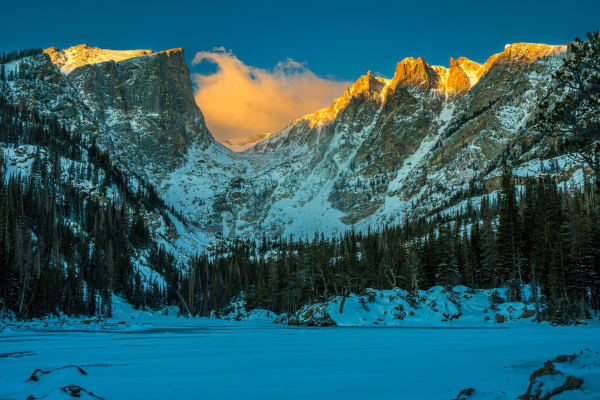
2.Dream Lake
Rocky Mountain National Park's postcard lake, framed by Hallett Peak and Flattop Mountain.
Distance: 2.2 mi round trip · Elevation gain: About 425 ft · Lake elevation: About 9,900 ft
Best light: Sunrise is the classic: you look west up the lake as first light turns Hallett Peak orange while the water is often glassy. Arrive well before sunrise for a calm surface. Late September brings golden grasses and occasional early snow; winter offers frozen shoreline textures and far fewer people.
Full guide →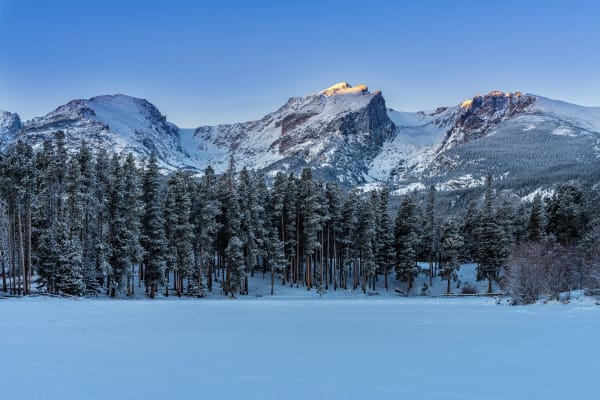
3.Sprague Lake Trail
An easy, flat lakeside loop with one of Rocky Mountain National Park's best sunrise reflections of the Divide.
Distance: About 0.8-0.9 mi loop · Elevation gain: Minimal (essentially flat) · Elevation: About 8,690 ft
Best light: Sunrise is the classic shot: the peaks to the west take first alpenglow while the lake is often glassy before morning breezes kick in. Mid to late September adds golden aspen along Bear Lake Road, and winter brings snow-plastered peaks with fewer people.
Full guide →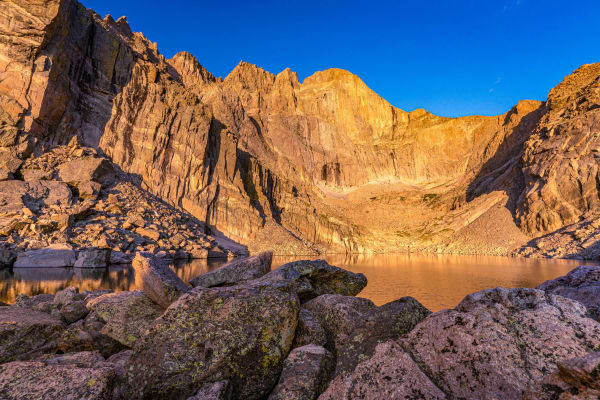
4.Chasm Lake
Stand at the foot of Longs Peak's 2,400-foot Diamond face, one of the most dramatic lake views in Colorado.
Distance: About 8.5-8.8 mi round trip · Elevation gain: About 2,500 ft · Lake elevation: About 11,800 ft
Best light: Sunrise is the reason to go: the Diamond faces east and turns fiery orange in first light, with the lake below still in shadow. July and August bring wildflowers near Columbine Falls, and the snow-free window is roughly July through October.
Full guide →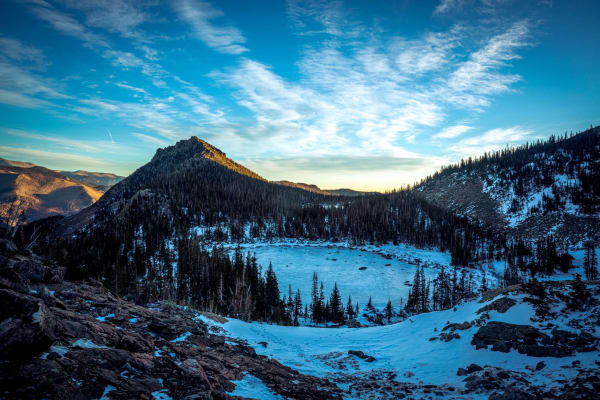
5.Lake Helene
A quiet subalpine lake beneath the jagged spire of Notchtop Mountain, just off the busy Bear Lake trails.
Distance: About 6.5 mi round trip · Elevation gain: About 1,300 ft · Trail high point: About 10,700 ft
Best light: Sunrise is the shot: the east-facing cliffs of Notchtop catch alpenglow first while the lake below stays calm. Mid to late September adds gold from the aspen groves near the start of the trail, and July brings wildflowers in the meadows around the lake.
Full guide →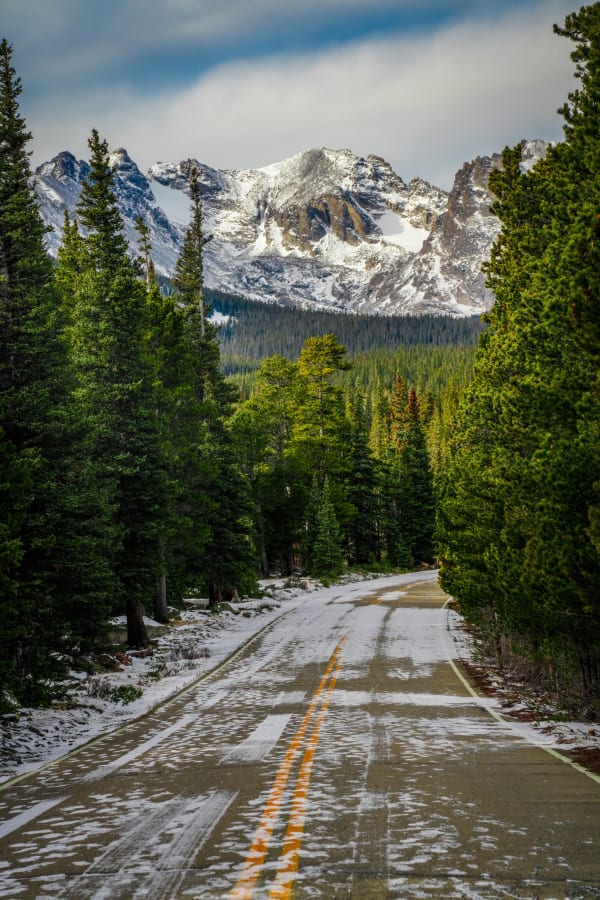
6.Brainard Lake Recreation Area
The Indian Peaks skyline reflected in a subalpine lake, an hour and change from Denver.
Elevation: About 10,600 ft · Access: Brainard Lake Road west from CO 72 at Ward · Fees/permits: Timed-entry reservation to park inside (Recreation.gov); $10 day-use fee to walk or bike in from Gateway
Best light: Sunrise is the classic: the peaks to the west catch first alpenglow while the lake is often glassy before the wind rises. Late September brings golden willows and a chance of early snow on the summits; winter offers snowy solitude on skis or snowshoes.
Full guide →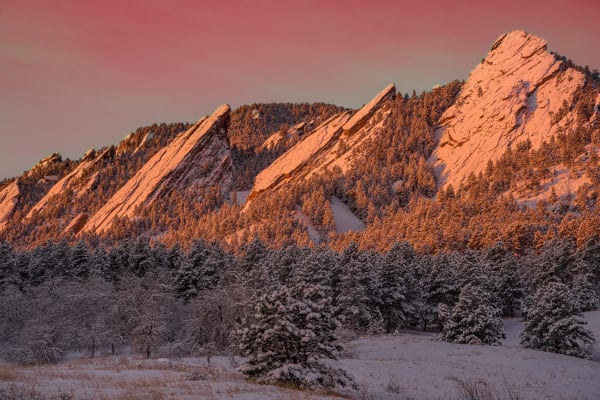
7.Boulder / The Flatirons
Boulder's tilted sandstone slabs, glowing red at sunrise above the historic Chautauqua meadow.
Green Mountain elevation: 8,148 ft · Rock: Fountain Formation sandstone, about 290 million years old · Trailhead: Chautauqua Park, Boulder
Best light: Sunrise. The east-facing slabs catch first light and glow orange for a few minutes, best after a dusting of snow in fall or spring. Late spring brings green meadow grass and wildflowers in the Chautauqua meadow; sunsets mostly put the rocks in shadow.
Full guide →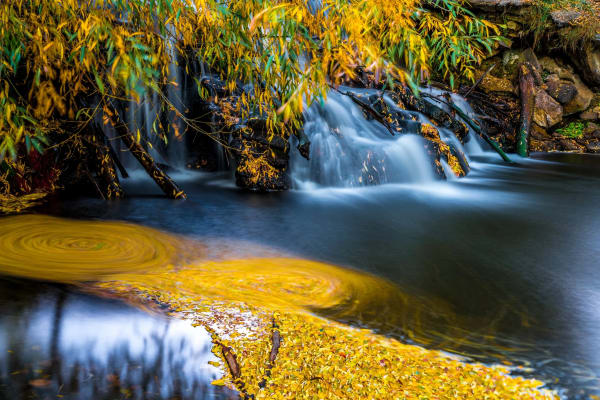
8.Golden Ponds
Four reclaimed gravel ponds in Longmont with big views of Longs Peak.
Size: 88 acres, including about 56 acres of water · Trails: About 2.6 miles, paved and gravel · Hours: 1 hour before sunrise to 1 hour after sunset
Best light: Sunrise is the best bet: the peaks to the west catch first light while the ponds are often calm, giving you alpenglow reflections of Longs Peak. Spring and fall migration bring the most bird variety, and late April and May are good for swallows over the water.
Full guide →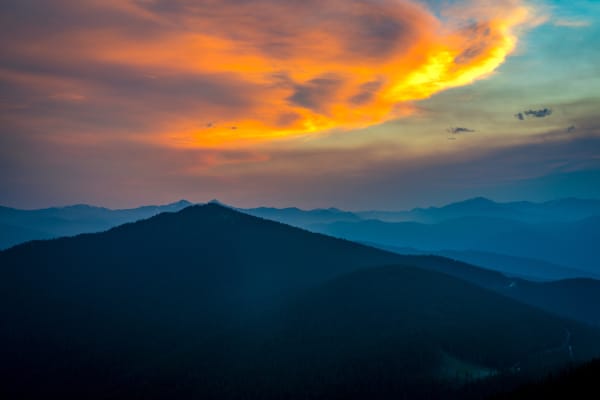
9.Chief Mountain
A short, high-starting summit hike with a 360-degree Front Range panorama from Longs to Pikes.
Summit elevation: 11,709 ft · Distance: About 4 mi round trip · Elevation gain: About 1,000 ft
Best light: Sunrise is the classic: the summit looks east over the plains for the sunrise itself while alpenglow hits Mount Blue Sky to the west. Early summer, with snow still on the high peaks, makes for the most dramatic panoramas.
Full guide →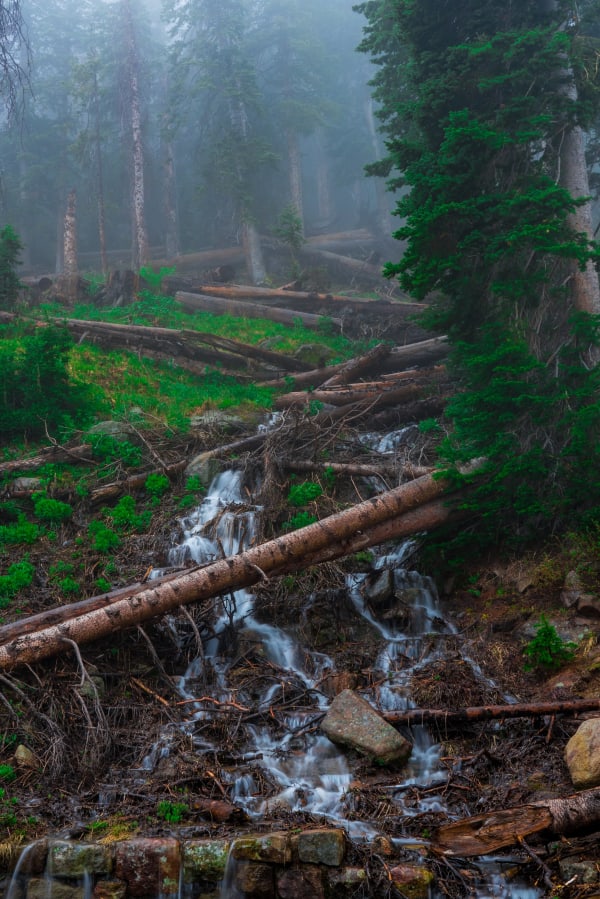
10.Trail Ridge Road, RMNP
The highest continuous paved road in North America, crossing Rocky Mountain National Park's alpine tundra.
Length: 48 mi, Estes Park to Grand Lake · High point: 12,183 ft · Above treeline: About 11 mi
Best light: Sunrise from the east-side pullouts lights the peaks of the Mummy Range and the Continental Divide, while sunset paints the tundra in long warm light. June brings lingering snow walls, July brings tundra wildflowers, and September brings elk rut and aspen color in the lower valleys.
Full guide →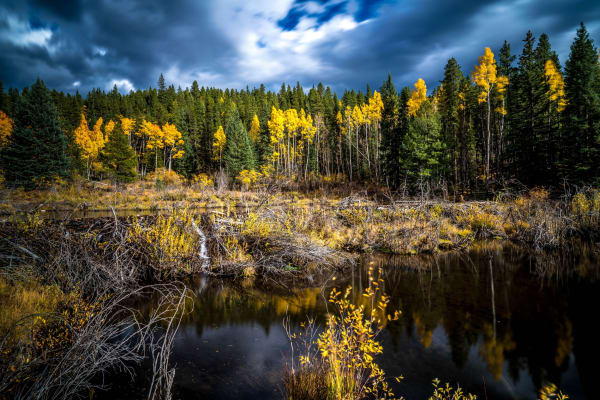
11.Guanella Pass
A paved scenic byway to 11,669 feet, with fall aspens, willow flats and Mount Bierstadt right off the road.
Summit elevation: 11,669 ft · Route: Georgetown to Grant (CR 381 / CR 62), fully paved · Distance: About 11 mi from Georgetown to the summit; 13.5 mi from Grant
Best light: Sunrise is the move at the summit: Mount Bierstadt and the Sawtooth sit to the east, so you can shoot the alpenglow on the Square Top side to the west or a backlit sunrise silhouette of Bierstadt over the willows. In fall, mid-morning light on the aspens of the Georgetown side is beautiful once the sun clears the ridges.
Full guide →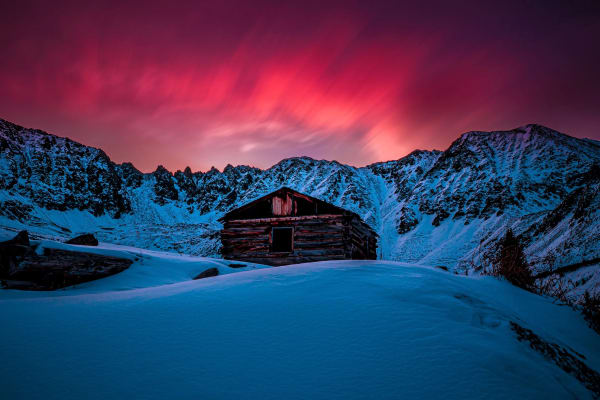
12.Mayflower Gulch
A short walk from Highway 91 to old mining cabins under a wall of Tenmile Range peaks.
Distance: About 3-6 mi round trip, depending on how far you go · Elevation gain: About 500-1,200 ft · Trailhead elevation: About 11,000 ft
Best light: The peaks ring the gulch to the east and south of the cabins, so their faces take warm side and front light late in the day and at sunset alpenglow, while sunrise gives softer backlit and side-lit scenes. Wildflowers peak in July into early August, and winter scenes with snow-loaded cabins are among the best here.
Full guide →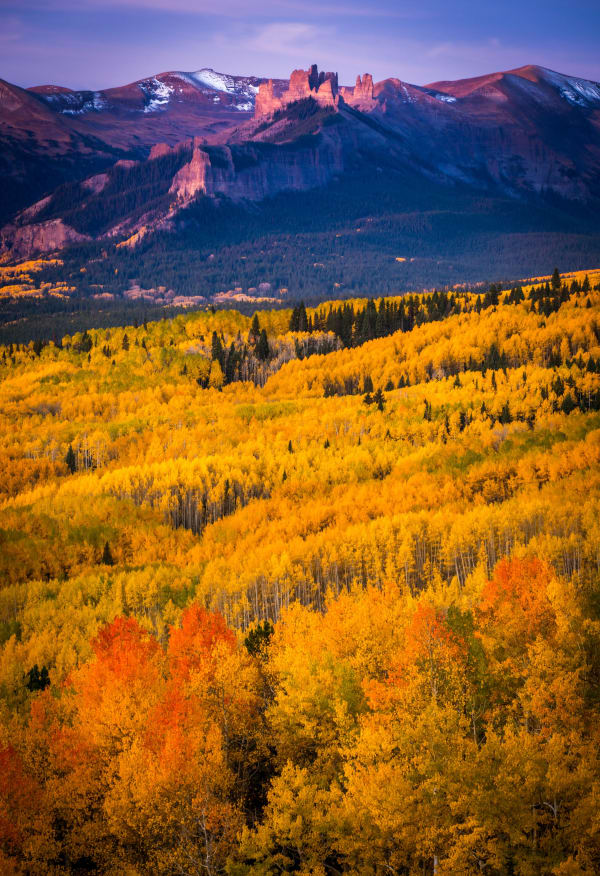
13.Ohio Pass (The Castles Overlook)
A quiet back road off Kebler Pass, with aspen-clad slopes and views toward the volcanic spires of The Castles.
Pass elevation: About 10,065 ft · Road: Gunnison County Road 730 (unpaved) · The Castles: Rock pillars topping out at 12,296 ft, West Elk Wilderness
Best light: The Castles sit west of the Ohio Creek road, so morning light falls on their east-facing walls and the aspen slopes in front of them; at sunset they turn to silhouettes against the western sky. Peak aspen color usually lands in late September.
Full guide →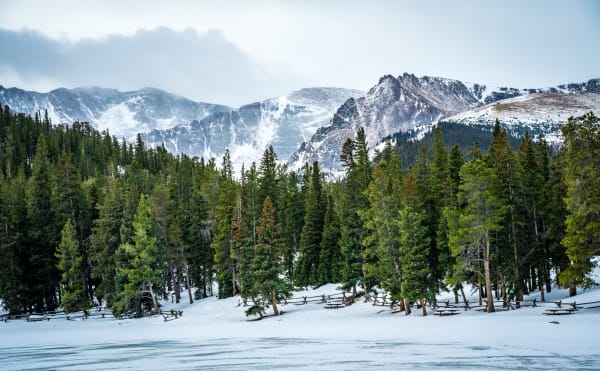
14.Echo Lake
A glacial lake at 10,600 feet at the foot of the Mount Blue Sky road, with a 1926 log lodge on its shore.
Lake elevation: About 10,600 ft · Managed by: Denver Mountain Parks · Getting there: About 12 mi south of Idaho Springs on CO 103
Best light: Sunrise and the hour after are best for calm water and reflections of the surrounding ridges. In early fall, the willows and scattered aspens around the lake and along CO 103 turn gold, and the lake often freezes by late fall.
Full guide →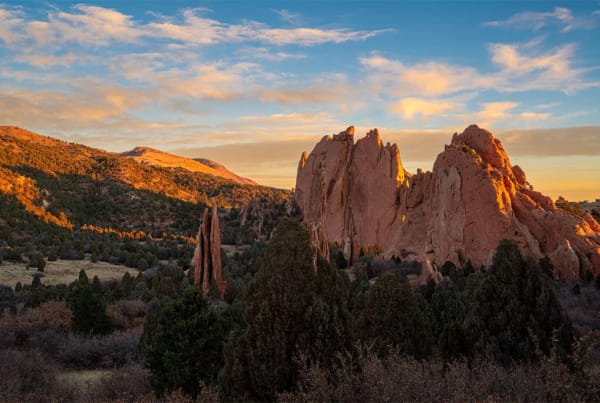
15.Garden of the Gods
Free, iconic red-rock fins in Colorado Springs, with Pikes Peak rising directly behind them.
Size: About 1,341 acres · Fees: Free park and visitor center · Hours: 5 a.m. - 10 p.m. (May-Oct); 5 a.m. - 9 p.m. (Nov-Apr)
Best light: Sunrise is the signature light: the sun rises behind you to the east and sets the red rock glowing against Pikes Peak to the west. Snowy winter mornings add a striking red-and-white contrast, and sunset can back-light the fins with dramatic skies.
Full guide →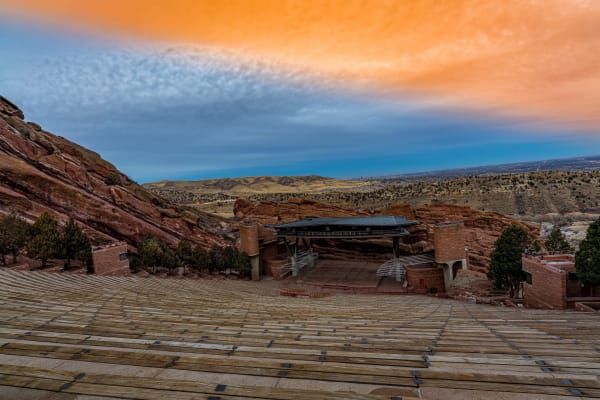
16.Red Rocks
Towering red sandstone monoliths and a world-famous amphitheater, 30 minutes from downtown Denver.
Park size: 868 acres · Location: Morrison, Jefferson County · Trading Post Trail: 1.4 mi loop
Best light: Sunrise is the prime time: the east-facing sides of the monoliths light up first and glow intensely, and the amphitheater looks out toward the rising sun over the plains. Fresh snow on red rock in winter is a special treat, and early mornings avoid both crowds and event setups.
Full guide →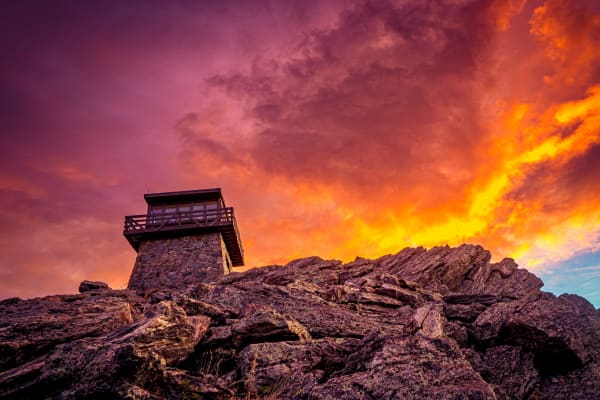
17.Mestaa'Ėhehe Mountain Fire Lookout
Sleep in a CCC-built stone lookout above 11,000 feet, with Denver's lights on one side and Mount Blue Sky on the other.
Summit elevation: 11,486 ft · Walk in: About 1 mi from the summer gate; about 2 mi in winter · Capacity: 4 guests
Best light: Stay the night and shoot both ends of the day: sunset paints the Mount Blue Sky massif and the Divide to the west, while sunrise comes up over the plains to the east. Clear winter nights give the crispest views of the Denver city glow.
Full guide →
More Colorado guides
Best Fall Color Spots in Colorado · Easy Colorado Hikes With Big Views · Winter Photography Spots in Colorado · Best Alpine Lake Hikes in Colorado · Colorado 14ers: Hiking and Photography Guide · Photography Spots Near Denver · Best Wildflower Hikes in Colorado · Colorado Waterfall Hikes · Where to Photograph Wildlife in Colorado · Night Sky and Storm Photography in Colorado