Northern Lights in Colorado: When, Where and How to Photograph Them
By Chris Heaton · access details checked October 2026
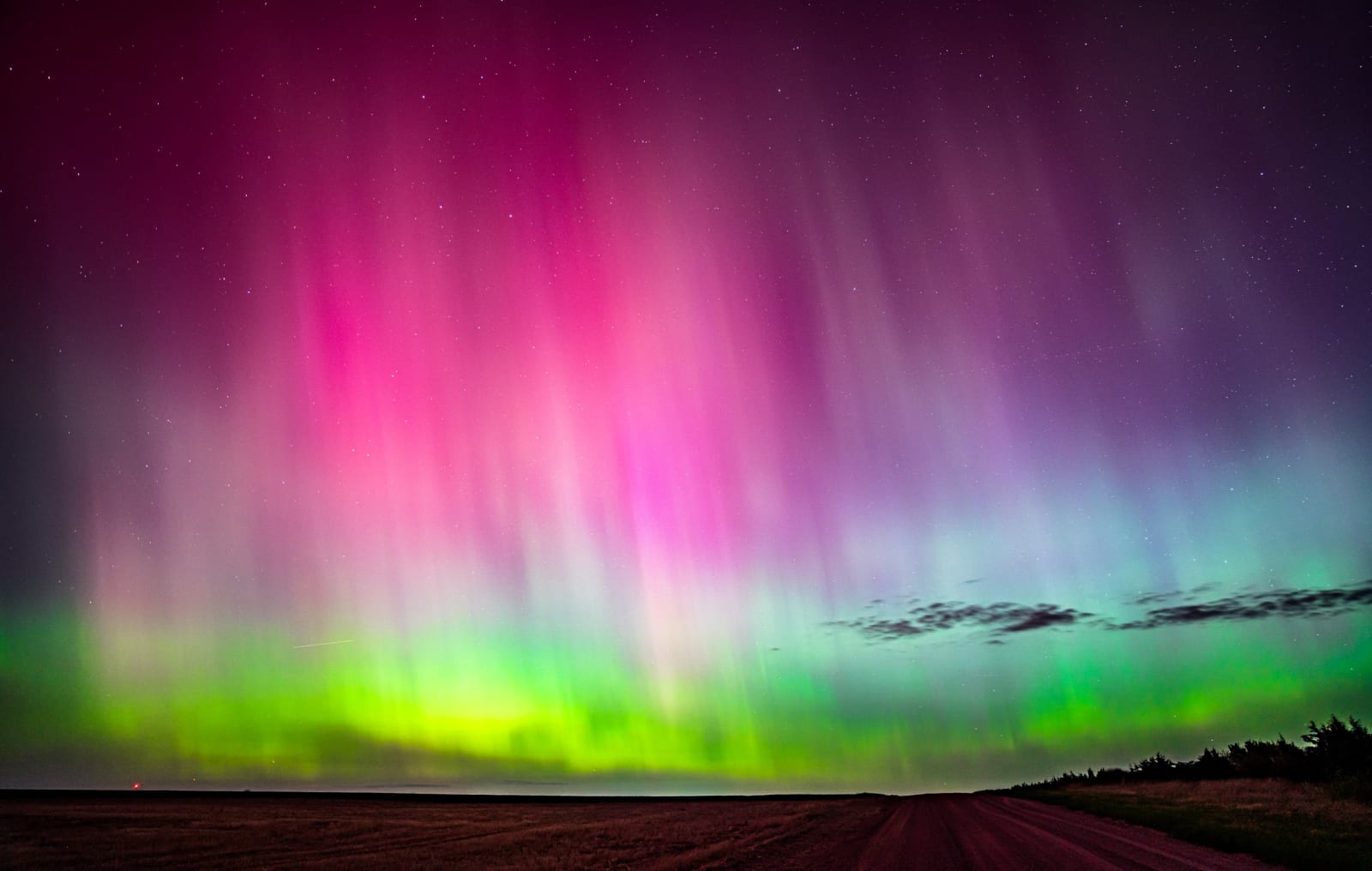
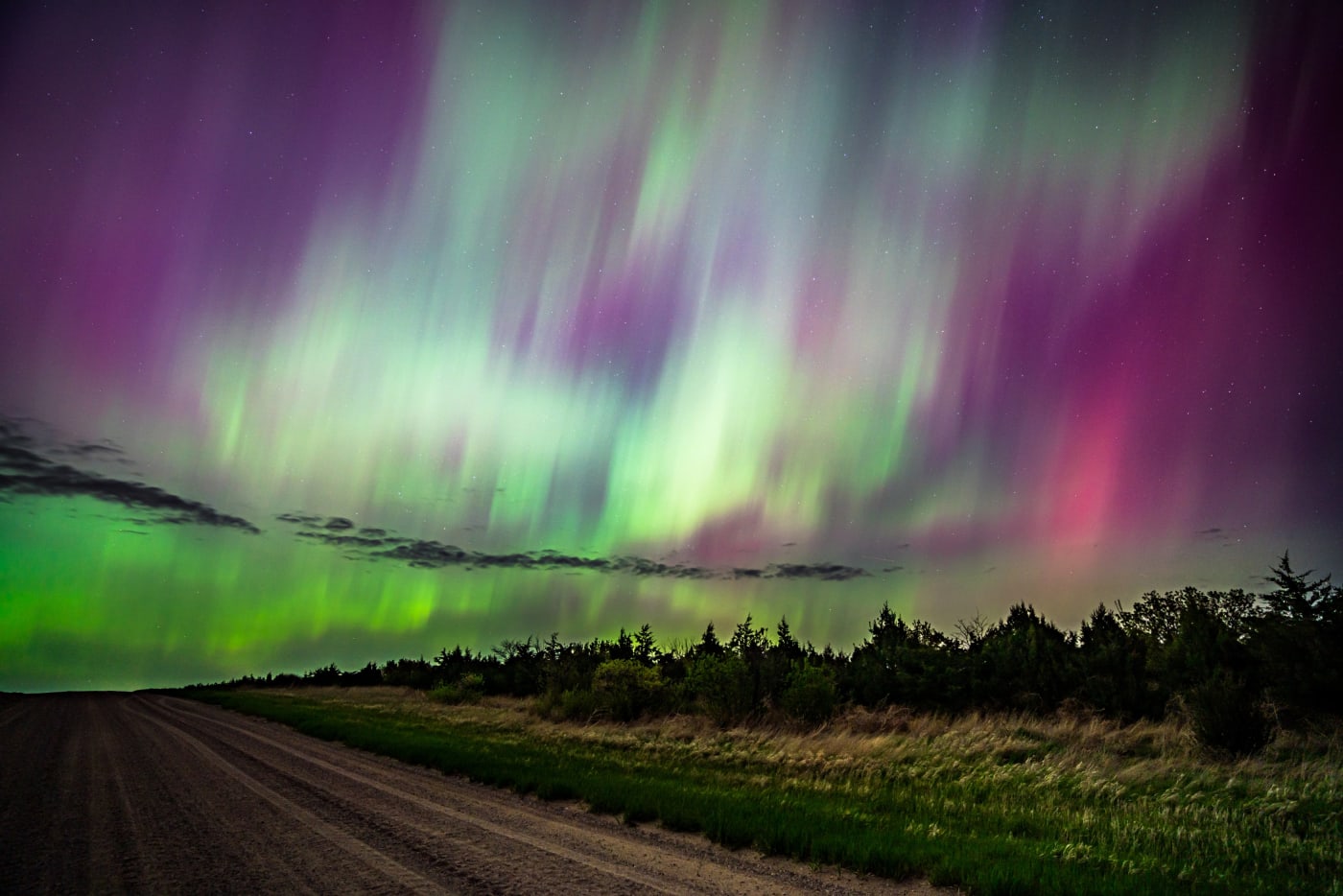
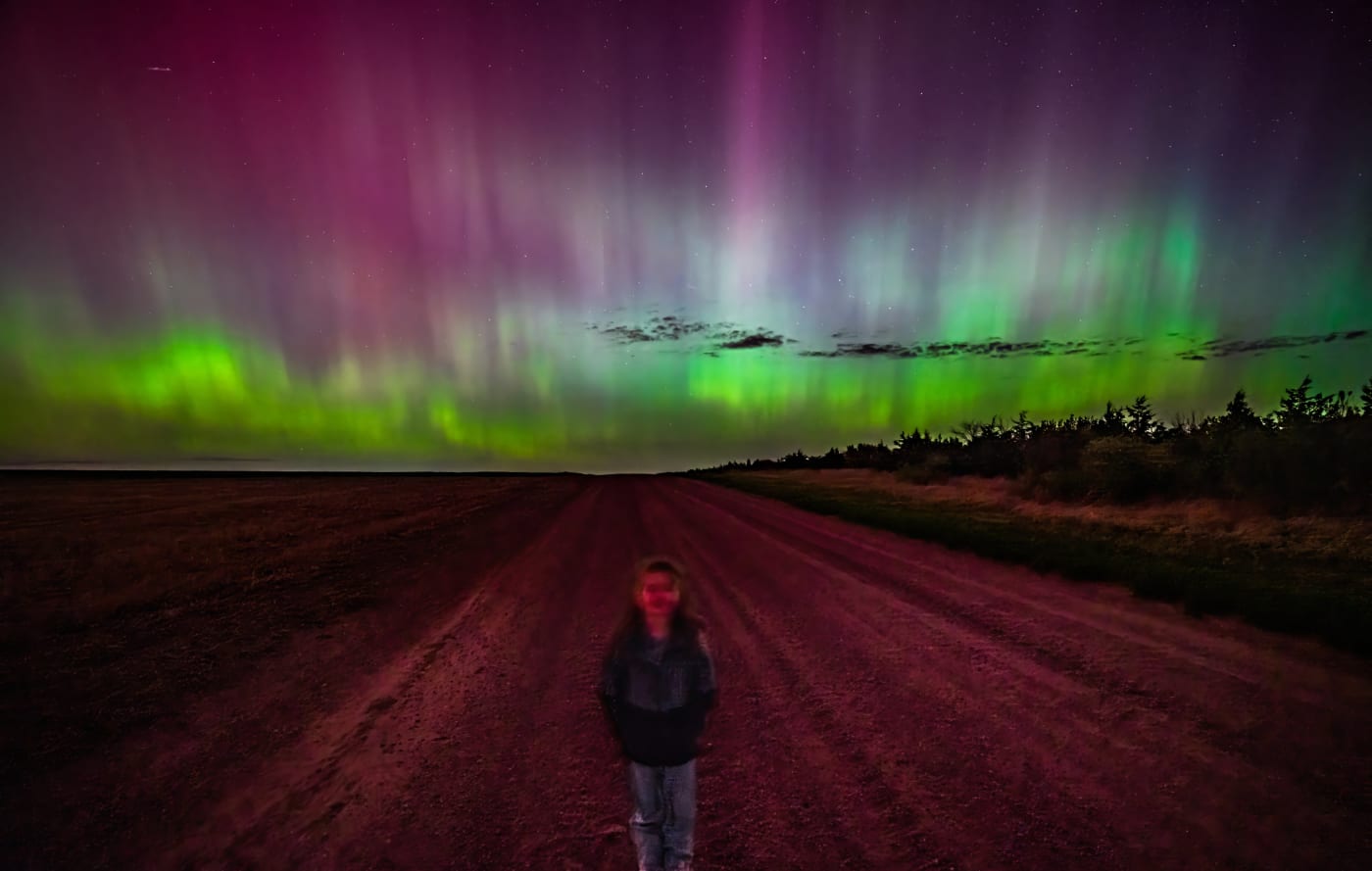
Colorado is a long way south of the usual aurora zone, but it does get the northern lights. On the night of May 10, 2024 the sky over the eastern plains went pink and green from horizon to overhead; the photos in this guide are from a field near Sterling that night. Big displays like that are rare. Fainter ones, that a camera picks up better than your eyes, happen several times a year when the sun is active. This guide covers how to tell when it's worth going out, where to go, and how to photograph it.
How often can you see the aurora from Colorado?
The northern lights are driven by storms on the sun. Space weather forecasters rate geomagnetic activity on the Kp scale from 0 to 9, and the higher it goes, the farther south the aurora reaches.
From Colorado, a Kp around 5 can put a faint glow on the northern horizon from a dark spot, mostly visible to a camera. Around Kp 7 and up, the aurora can climb well above the horizon and become obvious to the naked eye. The great storms, like May 2024 (Kp 9) and October 2024, light up the whole sky, even from the edge of Denver.
The sun has been near the peak of its 11-year cycle, which is why the last few years have been so good. Strong storms can still happen for a few years after the peak, so it's worth paying attention through 2027.
- Kp 5: a faint glow low in the north from dark places; your camera will see more than you do.
- Kp 6: a brighter band and some rays on camera; sometimes visible to the eye far from city lights.
- Kp 7 and up: colors and pillars visible to the eye, rising higher in the sky.
Where to watch
You want three things: a clear view low to the north, as little light pollution as possible to the north, and clear skies. The Front Range cities sit north of a lot of the state, so get north and east of them, or up high with a view across the plains.
The eastern plains are hard to beat: flat horizons, dark skies and less cloud than the mountains. The Pawnee National Grassland and the farm roads around Sterling are great choices; Sterling is where I photographed the May 2024 storm. In the mountains, high passes with an open view to the north work well, but mountain ridges can block the low glow on weaker nights.
- Pawnee National Grassland and the Pawnee Buttes: dark, wide open, about two hours from Denver.
- Farm roads around Sterling and Fort Morgan: flat horizons in every direction.
- Jackson Lake State Park: an International Dark Sky Park on the northern plains.
- Trail Ridge Road and high passes when they're open: altitude and a long view north.
- Anywhere you can face north across open ground, away from town lights.
When to go out
Check the aurora forecast in the afternoon and again after dark; storm timing is hard to predict, and the best displays often arrive in bursts that last 20 to 40 minutes. The darkest hours, roughly 10 p.m. to 2 a.m., are usually best. A bright moon washes out faint aurora, so the nights around new moon are better for weaker storms.
The Planning Your Shot page on this site shows the current aurora outlook for Colorado, and you can sign up for a free email alert that goes out when a strong storm is forecast.
Camera settings that work
Put the camera on a tripod, switch to manual focus and focus on a bright star using your screen zoomed in. Then start with the settings below and adjust after a test shot. If the image looks dark and noisy, raise the ISO or lengthen the exposure. If the pillars are smearing, shorten it.
- Lens: as wide and fast as you have, ideally 14–24mm at f/1.8–f/2.8.
- Shutter: 2–10 seconds. Shorter keeps the pillars sharp when the aurora is moving fast.
- ISO: 1600–6400, depending on how bright it is and how fast your lens is.
- White balance: around 3500–4000K, or shoot RAW and set it later.
- Include something on the ground: a barn, a road, a tree or yourself. It gives the sky scale.
Using your phone
Modern phones are surprisingly good at aurora. Use night mode, hold the phone against something steady or use a small tripod, and let it take its full exposure. On iPhone, night mode turns on by itself in the dark; on Android it's usually called Night or Night Sight. Many people only realize the aurora is out because their phone photo shows pink that their eyes didn't.
Editing aurora photos
Shoot RAW so you can fix white balance and pull detail from the shadows. Keep it believable: the colors in big storms are genuinely pink and green, but pushing saturation hard makes the sky look fake. Reduce noise gently, and keep the foreground darker than the sky so the eye goes up.
Spot guides mentioned here
Useful on this site
- Planning Your Shot: Current aurora outlook and sky conditions for Colorado
- Aurora email alerts: Free alerts when a strong storm is forecast
- Colorado Sky Pack: Includes four northern lights skies from May 2024
Questions
Can you see the northern lights in Colorado?
Yes, during strong geomagnetic storms. A faint glow on the northern horizon is possible from dark spots around Kp 5, and bright, colorful displays visible to the eye usually need Kp 7 or higher. The strongest storms, like May 2024, are visible statewide.
Where is the best place to see the aurora in Colorado?
Somewhere dark with an open view to the north: the Pawnee National Grassland, farm roads around Sterling, Jackson Lake State Park, or high passes with a long northern view.
What time of night is best?
Usually between about 10 p.m. and 2 a.m., but storms arrive in bursts, so check the forecast through the evening.
Why does my camera see more color than my eyes?
Your eyes don't see color well in the dark. A camera collects light for several seconds and records the pink and green that look gray or white to you.
Fees, reservations and road dates change. Confirm with the managing agency before you go. Sources: swpc.noaa.gov, bouldercast.com, darksky.org.
More guides